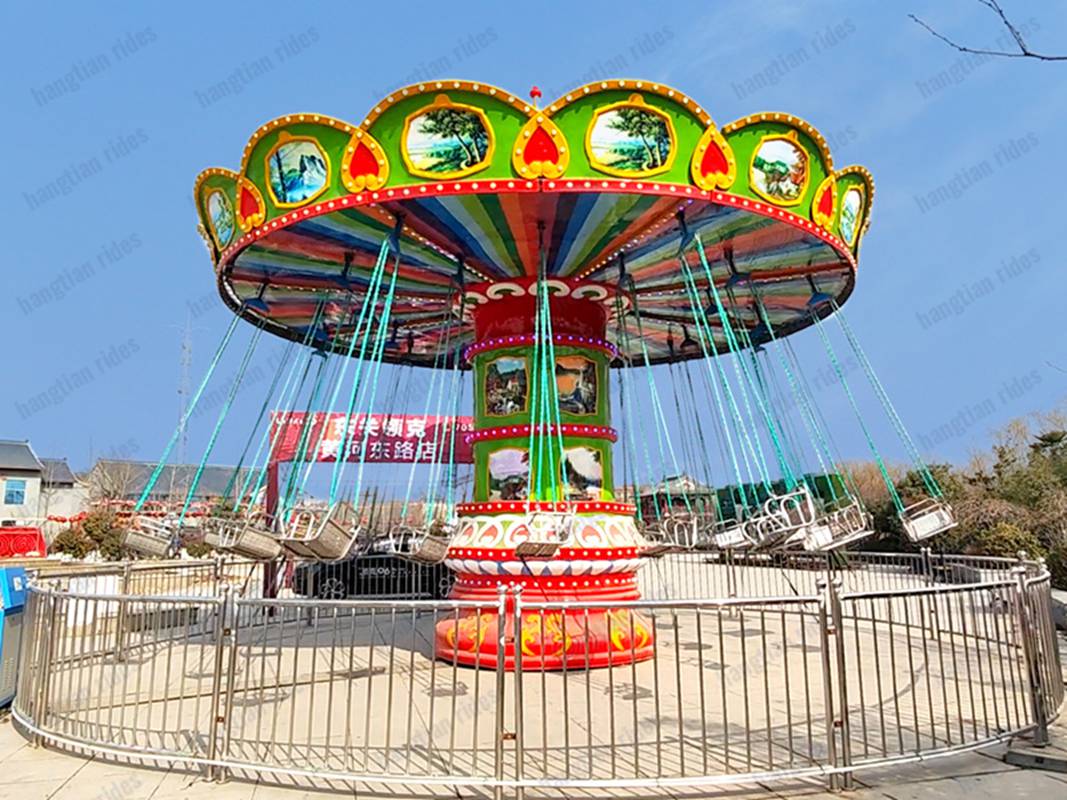
To ensure the quality of flying swing rides, swing carousel rides, and spinning swing rides, you need to implement a layered inspection framework covering structural materials, mechanical systems, safety features, and ongoing operational checks, with tailored criteria for each ride’s unique design.
🛠️ Universal Pre-Purchase & Structural Quality Checks
First, validate the foundational build of the ride to ensure long-term durability:
- Inspect structural materials: Confirm main frames and swing components use high-strength, corrosion-resistant steel, with no visible cracks or deformation.
- Verify component certifications: Ensure critical parts like chains, bearings, and safety restraints meet international amusement ride safety standards.
- Conduct connection checks: Examine all weld points for uniformity, and confirm bolted connections are torqued to specified values with no signs of loosening.
🎢 Type-Specific Core Quality Check Items
| Ride Type |
Key Mechanical Checks |
Safety Feature Validation |
| Flying Swing Ride |
Smooth rotation system with no abnormal vibration; stable suspension arm spacing |
Secure lap bar/harness locks; instant emergency stop response |
| Swing Carousel Ride |
Accurate vertical lift alignment; no jolts during height adjustment |
Lift mechanism safety locks; anti-tilt seat balance |
| Spinning Swing Ride |
Sync between central rotation and individual seat spinning; no lag in speed changes |
Centrifugal force resistance of frames; redundant speed control systems |
✅ Ongoing Operational Quality Maintenance
- Daily shift inspections: Before opening, test core functions (rotation, restraints, emergency stops) and document any unusual noises or movements.
- Quarterly structural audits: Hire certified inspectors to perform non-destructive testing on welds and load-bearing components to detect hidden wear.
- Feedback loop: Collect input from operators and riders to identify recurring quality concerns, such as seat instability or uneven rotation, for targeted repairs.