News

The Heart-Stopping Mechanics: How Do Drop Tower Rides Work?

2026-01-06 17:44:11
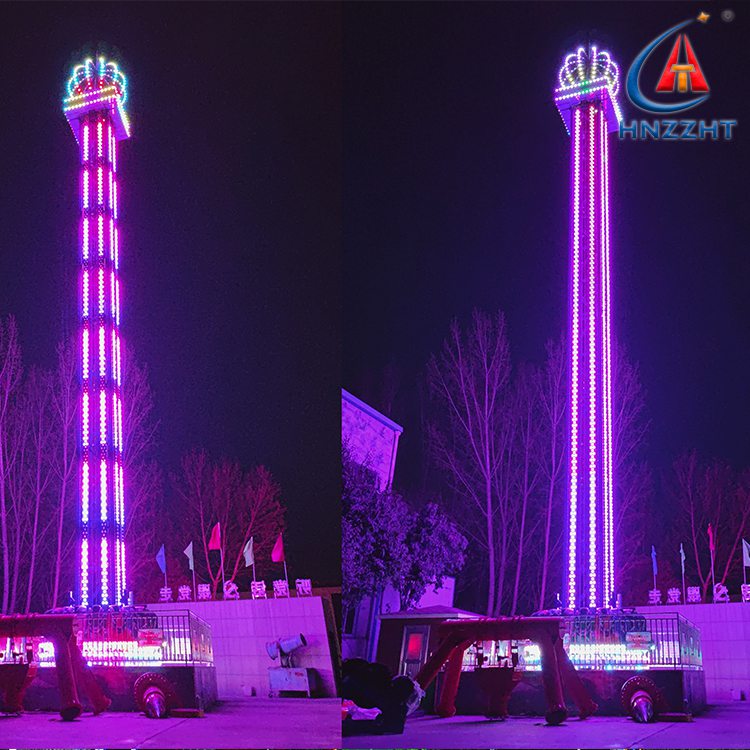
Drop tower rides are iconic fixtures in amusement parks worldwide, delivering an unmatched adrenaline rush through controlled vertical terror. Understanding their engineering reveals the fascinating blend of physics and technology that creates that signature moment of weightlessness. Here’s a breakdown of how these gravity-defying attractions operate:
drop-tower-rides

⚙️ 1. Core Mechanics: Harnessing Gravity and Resistance

  • The Ascent: Riders are secured in seats attached to a large gondola. Powerful electric or hydraulic motors lift the gondola vertically along a central tower structure—often reaching heights of 200–400 feet (60–120 meters). This slow climb builds anticipation and offers panoramic views.
  • The Suspense: At the peak, the gondola pauses briefly. This moment maximizes psychological tension and positions riders for the sudden descent.
  • The Free Fall Tower Experience: Release mechanisms disengage, allowing gravity to accelerate the gondola downward. Passengers experience near-true free fall tower, reaching speeds of 50–70 mph (80–113 km/h). The sensation of weightlessness (“zero G”) dominates this phase due to the acceleration matching gravity’s pull.
  • Deceleration: Braking systems activate near the base. Most modern towers use:
    • Magnetic Eddy Current Brakes: Non-contact magnets induce currents in fins attached to the gondola, creating resistance without physical wear.
    • Pneumatic (Air) Brakes: Compressed air rapidly pushes pistons or pads against braking surfaces, offering smooth but forceful stopping.

🔁 2. Variations in Motion: Beyond Straight Drops

  • Straight Drop Towers: The classic design. The gondola drops vertically along a fixed path. Intensity is determined by height, drop speed, and braking abruptness.
  • Tilted or Torsion Towers: Some towers tilt the gondola slightly during ascent/descent, altering riders’ orientation to enhance disorientation.
  • The Air Drop Rotating Tower Innovation: This design adds rotation. The gondola spins axially during the ascent or free fall. Rotation creates lateral G-forces, amplifying the disorienting effect and making the free fall feel even more unpredictable. The spin mechanism is typically driven by motors or guided rails.

🛡️ 3. Safety Systems: Precision Engineering for Thrills

  • Restraints: Over-the-shoulder harnesses and lap bars lock securely before ascent. Sensors confirm all restraints are engaged before the ride initiates.
  • Redundant Braking: Multiple independent braking systems (primary + backup) ensure stopping power even if one fails.
  • Anti-Rollback Devices: Mechanical catches prevent unintended downward movement during ascent.
  • Wind & Sensor Monitoring: Rides automatically pause or adjust operations if high winds, structural stress, or sensor anomalies are detected.

🌌 4. The Science of Sensation: Why It Feels Like Flying

  • Weightlessness: During true free fall, the seat accelerates downward at the same rate as the rider’s body. This cancels the normal upward force (reaction force) from the seat, creating the illusion of floating.
  • G-Force Variations: Riders experience:
    • Positive Gs (Heaviness): During ascent and braking.
    • Zero Gs (Weightlessness): At peak free fall tower.
    • Negative Gs (Lift-off): Briefly during rapid deceleration, pushing riders against restraints.
  • Psychological Impact: The combination of height, sudden acceleration, and lack of control triggers primal fear responses, amplified by visual cues during ascent.

🏗️ 5. Design & Integration: More Than Just a Tall Structure

  • Tower Construction: Steel lattice or tubular columns provide strength and wind resistance. Foundations are massive concrete piers anchoring the structure.
  • Gondola Design: Seats are arranged radially around a central column. Materials balance lightweight durability with rider containment.
  • Theming: Many towers integrate lighting, sound, and themed elements (e.g., “space launch” or “demonic plunge”) to enhance the narrative.
  • Location Strategy: Towers are often placed as park centerpieces (“amusement park by me landmarks”) due to their height and visibility.
Conclusion: Engineering the Edge of Fear
Drop tower rides, from the classic free fall tower to the spiraling Air Drop Rotating Tower, masterfully manipulate gravity, acceleration, and human perception. Their operation relies on meticulous physics calculations, robust mechanical systems, and fail-safe technology to transform a simple “up and down” motion into a visceral, unforgettable experience. While the plunge lasts seconds, the precision behind it—ensuring both thrills and safety—represents years of engineering innovation. Next time you feel that stomach-lifting drop, remember: it’s not just falling; it’s gravity choreographed.

Home Tel Mail Inquiry