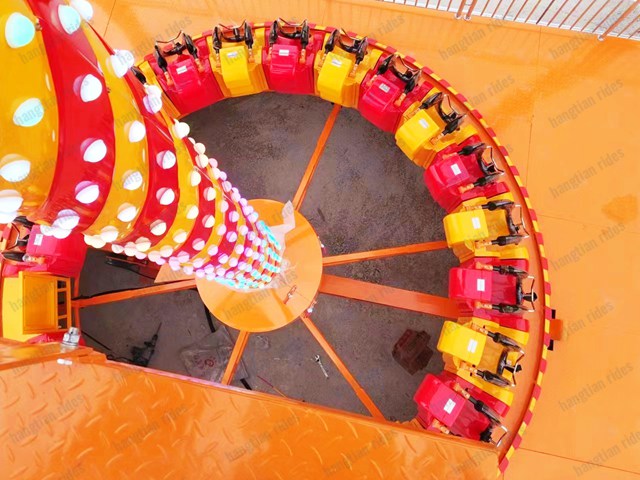
The mechanical structures of all three pendulum ride types rely on high-strength steel alloys as the foundational material, with targeted wear-resistant metals for critical moving components to handle dynamic loads and ensure long-term safety.
| Ride Component |
Primary Material |
Key Function |
| Main structural frame/arm |
High-strength low-alloy steel (HSLA) |
Withstand dynamic swing and centrifugal loads |
| Rotating shaft & bearings |
Chromium-molybdenum alloy steel |
Enhance wear resistance for frequent motion |
| Suspension connection parts |
Stainless steel 304/316 |
Prevent rust and maintain connection stability |
| Seat support brackets |
High-tensile carbon steel |
Provide stable support for rider seats |
🎢 Why High-Strength Steel is Non-Negotiable
The main frame and pendulum arm of
360 pendulum ride and
giant pendulum ride must support extreme dynamic forces—including sudden acceleration, deceleration, and centrifugal pull during full 360-degree rotations. High-strength low-alloy steel (HSLA) offers an optimal balance of high yield strength and ductility, preventing structural deformation or failure under intense loads. For smaller
pendulum carnival ride, a slightly lighter HSLA grade reduces installation costs while still meeting safety load requirements.
🔧 Wear-Resistant Metals for Critical Moving Parts
Rotating shafts and bearings, which enable the ride’s signature swinging motion, are subject to constant friction and impact. Chromium-molybdenum alloy steel is surface-hardened to resist wear, extending component lifespan and reducing maintenance frequency. Stainless steel is used for suspension pins and connection points to avoid corrosion, which could compromise the smooth operation of the pendulum over time.