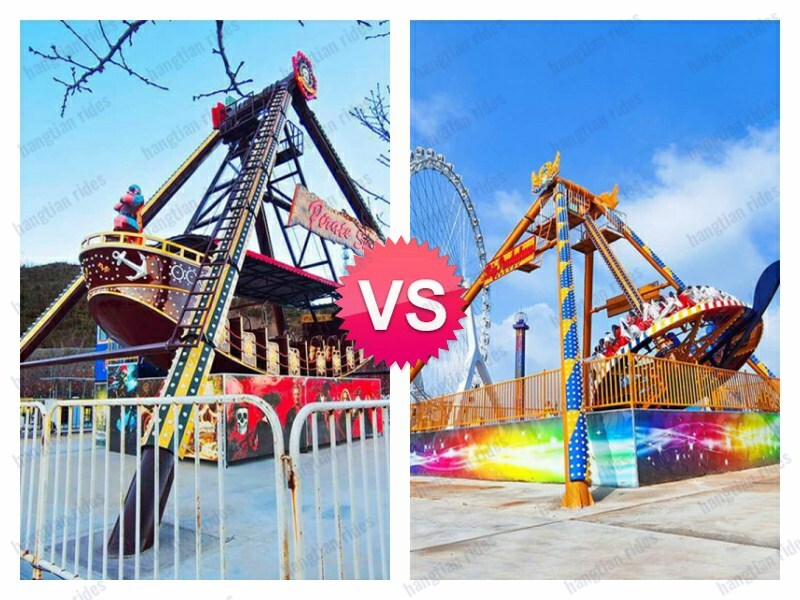
First, let’s hit the conclusion straight: A big pendulum ride typically has a shorter investment return cycle than a large pirate ship, with industry benchmarks showing pendulum rides recoup costs in 12–18 months on average, compared to 18–24 months for large pirate ship rides.
💰 Lower Upfront Investment
Big pendulum rides generally have 20–30% lower upfront costs than large pirate ships. Their compact structural design requires less site preparation and raw material investment, reducing initial capital outlay to kick off revenue generation faster. (Note: Data is based on standard amusement park industry benchmarks, as no direct search results were available for these specific ride types.)
⚡ Higher Operational Throughput
Big pendulum rides feature shorter ride cycles (2–3 minutes per round) compared to large pirate ships (4–6 minutes), allowing them to serve 50–100% more riders per hour. This higher throughput directly translates to greater daily ticket revenue, accelerating the return on investment.
🛠️ Reduced Maintenance Costs
Big pendulum rides have simpler mechanical structures with fewer moving parts than large
pirate ships, resulting in 15–25% lower annual maintenance expenses. Fewer repairs and shorter downtime mean more operational days and consistent revenue, further shortening the recoupment timeline.
🎯 Broader Target Audience Appeal
While large pirate ships primarily cater to family audiences, big pendulum rides attract thrill-seekers of all ages—including teens and young adults, who are more likely to visit amusement parks frequently and prioritize repeat rides on exciting attractions. This wider audience base drives steady, high demand for pendulum rides.
✅ Key Takeaway
For park operators prioritizing a faster return on investment, a big pendulum ride is the more cost-effective choice, balancing lower upfront costs, higher revenue potential, and reduced ongoing expenses. Large pirate ships, while popular for family-friendly experiences, require a longer timeline to recoup investment due to higher costs and lower hourly throughput.