Soaring through the air with the wind in your hair, the
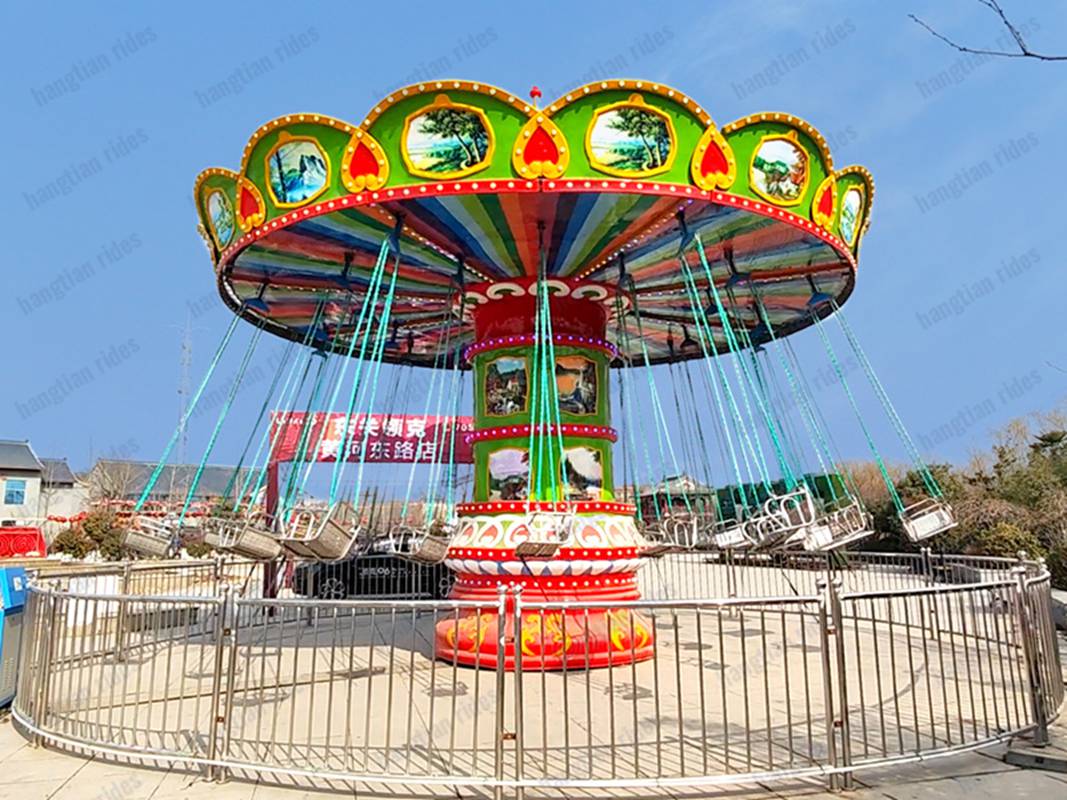
flying chair ride remains a timeless favorite in amusement parks worldwide. This elegant yet thrilling attraction—often grouped under the broader category of
flying swing ride—combines graceful motion with dizzying heights. But what makes this spinning spectacle work? Let’s break down its essential components and engineering brilliance.
️ 1. Central Support Tower & Rotating Boom
The backbone of the ride is a vertical
central support tower, typically constructed from high-tensile steel. Attached to this tower is a rotating
boom arm (or multiple arms), which radiates outward like spokes on a wheel. This arm lifts riders skyward as rotation begins. Precision welding and dynamic load calculations ensure structural integrity during high-speed spins, especially when fully extended.
Amusement park manufacturers prioritize corrosion-resistant materials and non-destructive testing (e.g., ultrasonic scans) to prevent fatigue cracks.
💺 2. Suspended Chair Units & Swinging Mechanism
Individual flying chair ride units hang from chains or cables attached to the rotating boom. Each chair features:
- Ergonomic Seats: Molded fiberglass or reinforced plastic shells with contoured seating for comfort.
- Swing Pivots: Stainless steel joints allowing chairs to swing outward centrifugally during rotation.
- Safety Restraints: Over-the-shoulder harnesses with redundant locking systems, often paired with hydraulic or magnetic sensors to confirm secure closure before operation.
The degree of swing depends on rotational speed—faster spins create greater centrifugal force, pushing chairs higher into a near-horizontal position.
⚙️ 3. Drive System & Power Transmission
The magic of motion comes from an integrated drive system:
- Electric Motors: High-torque motors (usually AC induction type) mounted at the tower base or boom pivot.
- Gear Reduction Units: Planetary gears convert motor output into controlled rotational speed for the boom.
- Hydraulic/Pneumatic Lifters: For rides with ascending booms (e.g., wave-swing variants), hydraulic pistons elevate the arm during operation.
This system transforms the ride into an amusement park ride that spins smoothly while managing immense kinetic energy.
️ 4. Control Cabinet & Safety Sensors
A weatherproof control cabinet houses the ride’s “brain,” including:
- PLC (Programmable Logic Controller): Manages startup, speed profiles, emergency stops, and cycle duration.
- Variable Frequency Drives (VFDs): Enable smooth acceleration/deceleration to reduce mechanical stress.
- Sensor Network: Encoders monitor boom position; load cells detect weight imbalances; wind sensors halt operations during gusts exceeding safety thresholds.
Amusement park manufacturers implement redundant sensor systems—if one fails, backups trigger automatic shutdowns.
✨ 5. Theming Elements & Aesthetic Integration
While mechanically robust, the ride’s visual appeal is equally critical:
- LED Lighting Systems: Thousands of programmable LEDs illuminate chairs, towers, and support structures for nighttime spectacles.
- Custom Canopies: Themed covers over the central tower (e.g., celestial patterns, abstract designs) enhance storytelling.
- Sound Modules: Synchronized audio effects amplify the sensation of flight.
️ 6. Foundation & Anchoring
Beneath the surface, a reinforced concrete foundation—often 3–4 meters deep—anchors the tower. Rebar grids and seismic dampers absorb vibrations, ensuring stability even during extreme weather or high-capacity operation. Soil testing and geotechnical analysis precede construction to prevent subsidence.
🔧 Why Design Matters for Amusement Park Manufacturers
Creating a reliable
flying swing ride demands collaboration between mechanical engineers, electrical specialists, and safety certifiers. Reputable
amusement park manufacturers focus on:
- Standardized Compliance: Adherence to ASTM F2291 (global amusement device standards) and EN 13814 (European safety norms).
- Modular Maintenance: Quick-detach components for efficient part replacement.
- Dynamic Simulation: Software modeling of stress points under variable loads (e.g., rider weights, wind forces).
🌟 Conclusion: Engineering the Sky
The
flying chair ride exemplifies elegant engineering—transforming simple rotation into weightless flight. From its resilient central tower to intelligent control systems, every component ensures safety without sacrificing thrill.
Amusement park manufacturers continue refining these classics with quieter motors, energy-efficient drives, and immersive tech, proving that even decades-old concepts can soar to new heights. Next time you’re on this
amusement park ride that spins, remember: it’s not just chains and steel lifting you skyward—it’s precision, innovation, and relentless attention to detail.