Installing a Ferris wheel is a complex engineering process that requires careful planning, professional equipment, and experienced technicians. Whether the project involves a permanent attraction or a portable ride, every installation step must prioritize safety, structural integrity, and operational efficiency.
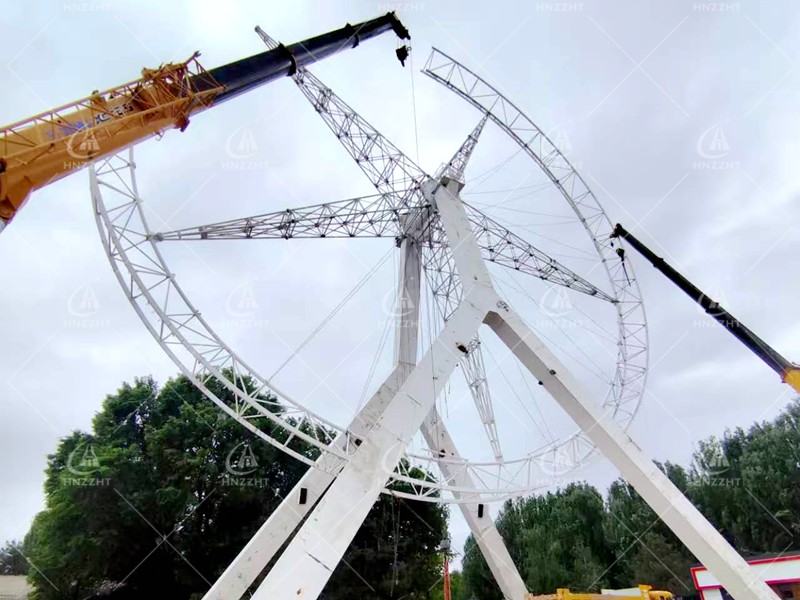
Working with an experienced Ferris Wheel Manufacturer and a reliable Ferris Wheel Supplier can significantly improve the installation process while ensuring compliance with industry standards.
Before any equipment arrives, the installation site should be fully prepared.
Important considerations include:
For an Amusement Park Ferris Wheel, the site should also allow enough space for passenger loading areas, emergency access, and future maintenance.
A professional engineering survey is highly recommended before construction begins.
The foundation is the most important part of the installation.
Engineers design the concrete foundation according to:
Steel anchor bolts are embedded into reinforced concrete before it cures. Precision measurements are critical because even small alignment errors can affect the entire installation.
The concrete must cure completely before heavy components are installed.
Before assembly begins, every component should be inspected carefully.
Check the following parts:
An experienced Ferris Wheel Supplier usually performs a complete pre-delivery inspection to minimize installation issues on site.
Damaged or missing parts should be replaced before assembly continues.
Large cranes are typically required to lift heavy structural components.
The installation sequence usually includes:
Each stage requires accurate measurements using professional surveying equipment.
Most Ferris Wheel Manufacturer installation teams follow strict engineering procedures to ensure every component meets design specifications.
After the wheel structure is complete, technicians install the mechanical drive system.
This includes:
Proper alignment of the drive system reduces wear, minimizes vibration, and improves operating efficiency.
Lubrication points should also be checked during installation.
Passenger cabins are installed only after the wheel frame has been fully assembled and inspected.
Each cabin must be securely connected to its suspension mechanism.
Technicians verify:
For an Amusement Park Ferris Wheel, passenger comfort is just as important as safety, so cabin alignment and smooth movement should be carefully tested.
The electrical system controls nearly every aspect of ride operation.
Installation typically includes:
All wiring should comply with local electrical regulations.
Protective grounding and overload protection are essential for safe operation.
Before operation, comprehensive inspections are carried out.
These inspections normally include:
Professional inspectors ensure that every system functions correctly before the ride is approved for testing.
The Ferris wheel should complete multiple trial cycles before carrying passengers.
Testing generally includes:
Technicians carefully observe every operating parameter during the testing period.
Any abnormal performance should be corrected immediately.
Once all testing has been completed successfully, the ride enters final commissioning.
Operators receive training on:
Proper training helps extend equipment life while maintaining safe daily operations.
Successful installation is only the beginning.
Routine maintenance should include:
Regular maintenance keeps the ride operating safely and reduces unexpected downtime.
Several challenges may occur during installation:
Experienced installation teams can quickly identify and resolve these issues while maintaining project schedules.
Installing a Ferris wheel requires detailed planning, skilled technicians, precision engineering, and strict safety procedures. From foundation construction to final commissioning, every step plays an essential role in ensuring long-term reliability and passenger safety.
Choosing a professional Ferris Wheel Manufacturer and an experienced Ferris Wheel Supplier helps simplify the installation process while improving construction quality. With proper installation, routine inspections, and regular maintenance, an Amusement Park Ferris Wheel can provide years of safe, enjoyable operation for visitors of all ages.