
The 10 most important questions to consider when purchasing
The Flying Chair Amusement Rides (also known as Swing Ride, Wave Swinger, or Chair-O-Plane) is one of the most popular and highest-repeat-purchase categories among fly-tower amusement rides. Passengers sit in chairs suspended by chains or wire ropes, rotating around a central column while swinging outward under centrifugal force; some models also feature lifting or tilting functions, combining thrill with visual spectacle. For procurement teams at amusement parks, scenic areas, commercial complexes, and cultural tourism projects, the flying chair may appear structurally simple, yet it involves multiple professional dimensions: special equipment safety, materials and craftsmanship, electrical controls, civil foundations, and operational maintenance. A careless procurement decision can lead to inspection failures, delayed park openings, high failure rates, or even safety accidents.
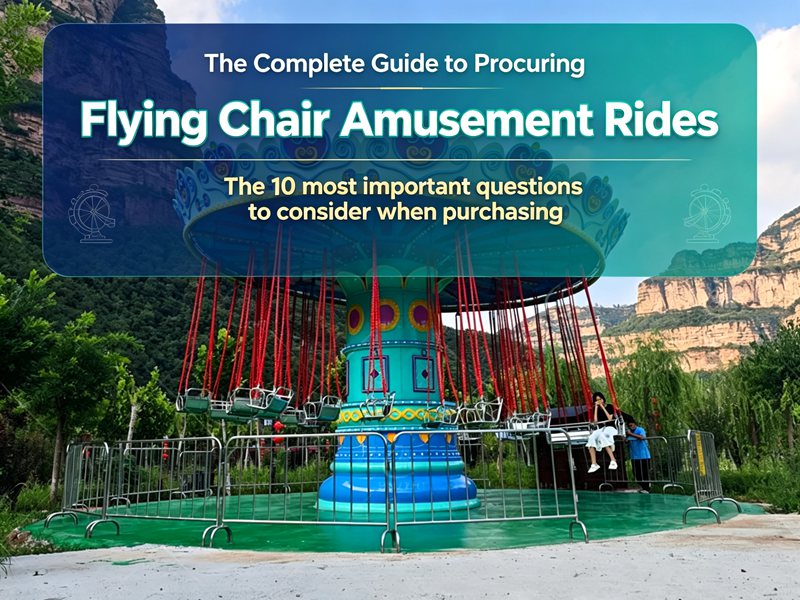
This article systematically examines the ten core questions that buyers care about most when procuring Flying Chair Amusement Rides, drawing on national special equipment safety regulations, industry technical standards, and firsthand manufacturing and operational experience, to provide a verifiable and actionable decision reference for procurement professionals.
Safety Red Line:
Flying Chair Amusement Rides are classified as “fly-tower category” large-scale amusement facilities under the national special equipment catalog. Their design, manufacturing, installation, modification, and repair all require corresponding qualifications, and equipment that has not passed inspection may not be put into operation. Buyers must treat certification compliance as a non-negotiable veto item — no price advantage can substitute for safety licensing.
Certification Compliance
Special Equipment Licenses and Safety Standards Are the Bottom Line
Certification is the first threshold in flying chair procurement, and also the most easily overlooked yet most consequential step. According to the Special Equipment Safety Law of the People’s Republic of China and the Safety Supervision Regulations for Large-Scale Amusement Facilities, the manufacturer of a flying chair ride must hold a Special Equipment Production License issued by the State Administration for Market Regulation or a provincial market regulation bureau, with the permitted scope covering the corresponding level of the fly-tower category.
Core Certifications Buyers Must Verify
| Certification | Purpose and Verification Points | Notes |
|---|---|---|
| Special Equipment Production License | Legal access certificate for the manufacturer; confirm that the permitted category includes “fly-tower category” and that the license is within its validity period | Issued by SAMR or provincial bureaus |
| Type Test Certificate | Proof that a specific model has passed type testing by a national special equipment inspection institute; one certificate per model | Issued by China Special Equipment Inspection Institute etc. |
| Installation, Modification & Repair License | The installation unit must hold corresponding qualifications; after installation, the equipment must pass supervisory inspection | May be combined with manufacturing license or held separately |
| ISO 9001 Quality Management System Certification | Evidence of controlled manufacturing processes; verify that the certification scope covers amusement equipment manufacturing | Issued by third-party certification bodies |
| Export Target Market Certifications | CE for the EU, UKCA for the UK, TÜV for Germany, ASTM for the USA, SABER for Saudi Arabia | Per destination country regulations |
| Supervisory Inspection Report | Mandatory inspection report before factory shipment and after installation; essential document for equipment registration | Issued by special equipment inspection agencies |
In addition, buyers should require the manufacturer to provide design document appraisal reports, non-destructive testing (NDT) reports for critical load-bearing components, and material certificates and mechanical performance reports for wire ropes and chains. These documents are not only required for inspection but also serve as important evidence for future maintenance, modification, and insurance claims.
Safety Performance
Triple Protection of Restraint, Braking, and Structural Systems
Safety performance is the core value of a flying chair ride and the question buyers ask about most frequently. A qualified flying chair should provide multiple layers of redundant protection across three dimensions: passenger restraint, braking, and structural safety.
Passenger Restraint System
According to GB/T 18161-2020 General Technical Requirements for Fly-Tower Amusement Facilities, when the equipment’s designed acceleration falls within higher zones as defined by GB 8408, two independent passenger restraint devices or one fail-safe restraint device shall be provided. Common restraint configurations for flying chairs include:
- Safety Restraint Bar (Safety Bar): Uses a ratchet-and-pawl locking mechanism. Premium equipment features two interlocking ratchet-and-pawl sets that engage alternately, so that if one set fails the other still maintains locking. The bar should be adjustable to accommodate passengers of different body sizes.
- Safety Belt: Serves as secondary protection, typically a lap belt with a lock that can only be opened with a special tool, preventing passengers from unfastening it themselves. Some high-end models use five-point harnesses.
- Secondary Confirmation Button: After the operator secures the restraint bars and fastens the seat belts, the platform safety confirmation button must be pressed before the ride can start, creating human-machine dual confirmation.
Braking and Emergency Systems
The braking system of a flying chair directly relates to passenger safety in emergency situations. Buyers should focus on:
- Dual Redundant Braking: The mainstream configuration combines mechanical band brakes with electromagnetic brakes. Since 2025, newly delivered mid-to-high-end equipment has generally been equipped with dual redundant braking systems, significantly reducing failure rates.
- Emergency Stop Button: Both the control console and the platform should be equipped with red mushroom-head emergency stop buttons, allowing the operator to cut power and activate braking instantly when an abnormality is detected.
- Speed and Limit Protection: The equipment should be equipped with rotational speed sensors and angle/height limit sensors that automatically trigger protection when operating parameters exceed the design range.
- Manual Release Device: In the event of a power outage or system failure, a mechanical device should be available to manually release the brake and lower passengers slowly.
Structural Safety
The main load-bearing components of a flying chair include the central column, rotating arm, suspension chains/wire ropes, seats, and connecting pins. Buyers should require the manufacturer to provide:
- Strength calculation reports and fatigue life analysis for main load-bearing components;
- Magnetic Particle Testing (MPT) or Ultrasonic Testing (UT) reports for critical welds;
- Suspension wire ropes shall comply with GB/T 8918, with mechanical performance reports provided with the equipment;
- All high-strength bolts shall have material certificates, and alignment marks shall be applied after installation for daily inspection.
Technical Specification Selection
Precise Matching Based on Site Conditions and Visitor Flow
Technical specifications determine the ride’s passenger capacity, space requirements, and operational efficiency. Before selecting a model, buyers should clarify their site dimensions, target audience, expected visitor flow, and budget range, then match them against the manufacturer’s specifications.
Reference Technical Specifications for Common Models
| Parameter | 36-Seat Luxury Flying Chair (Ref.) | 28-Seat Wave Swinger (Ref.) | 16-Seat Compact Flying Chair (Ref.) |
|---|---|---|---|
| Passenger Capacity | 36 persons | 28 persons | 16 persons |
| Equipment Diameter | φ16m | φ12m | φ6m |
| Equipment Height | approx. 11.2m | approx. 10m | approx. 6m |
| Operating Height | approx. 4.7m | approx. 3.6m | approx. 1.9m |
| Operating Speed | approx. 9.9 m/s | approx. 380 m/min (linear) | 0–15 rpm adjustable |
| Total Power | approx. 30 kW | approx. 25 kW | approx. 5.5 kW |
| Power Supply | 3N+PE 380V/220V 50Hz | 3N+PE 380V/220V 50Hz | 220V/50Hz |
| Footprint (incl. safety clearance) | φ18m | φ14m | φ12m |
Note: The above parameters are reference values for common industry models; specific values are subject to each manufacturer’s official technical documentation. According to GB/T 18161-2020, the deviation of dynamic parameters such as rotational speed from design values shall be controlled within -10% to +5%.
Key Selection Decision Points
- Capacity and Throughput: A 36-seat flying chair with a 3–4 minute cycle has a theoretical hourly throughput of approximately 500–700 passengers, suitable for medium-to-large parks and popular scenic areas. A 16-seat compact model suits community playgrounds, commercial complex atriums, and other space-constrained settings.
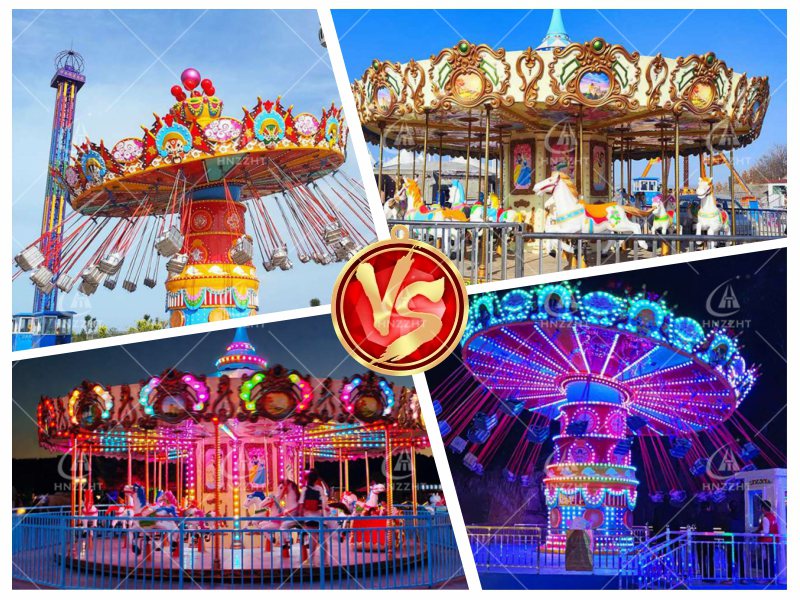
- Functional Differences: Standard flying chairs only rotate and swing outward under centrifugal force. Wave Swingers feature a tilting/undulating canopy that adds motion variety but require more space and cost.
- Target Audience: Large flying chairs typically require a minimum height of 1.2m and age of 6+. Compact models may accommodate younger children, but the manufacturer’s passenger restriction design must be confirmed.
- Operating Environment: Equipment is typically rated for ambient temperatures of 0–40°C, humidity ≤90% (at 25°C, non-condensing), and must stop operating when wind speed exceeds 15 m/s. At altitudes above 1000m, electrical components require derating.
Materials and Craftsmanship
Steel, Fiberglass, and Surface Finishing Determine Equipment Lifespan
Materials and craftsmanship are the key differentiators between quality equipment and low-cost inferior products, and directly determine service life and maintenance costs. The materials of a flying chair mainly fall into three categories: structural steel, suspension components, and fiberglass decorative parts.
Structural Steel and Anti-Corrosion Treatment
The main load-bearing structures of a flying chair — column, rotating arm, base — are made of high-quality carbon structural steel or low-alloy high-strength steel. Buyers should pay attention to the following process stages:
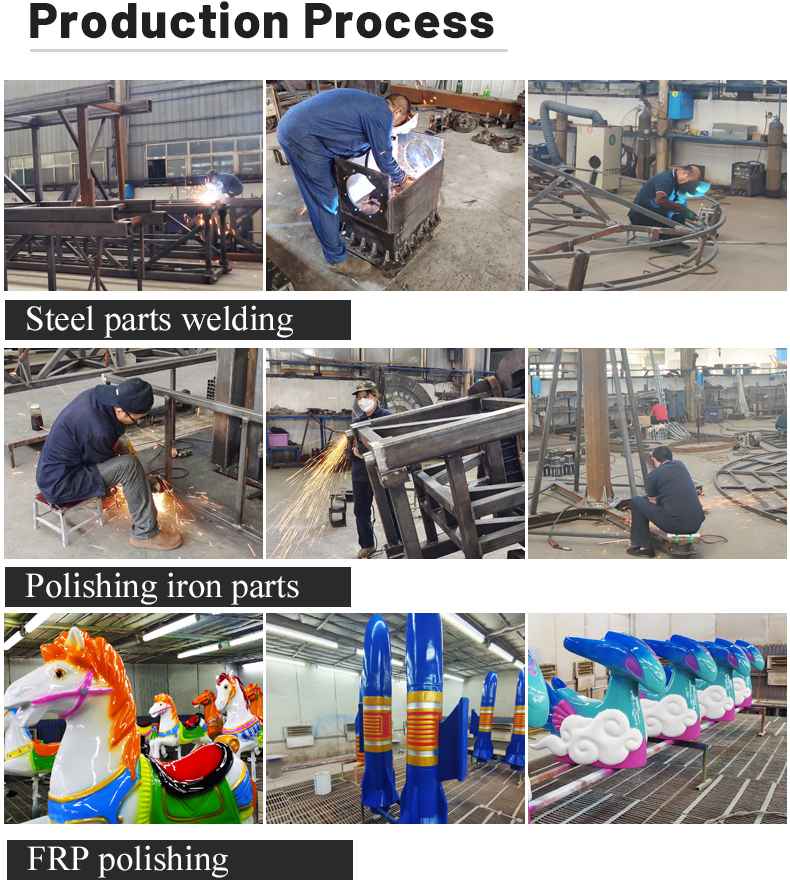
- CNC Cutting and Machining: CNC plasma/laser cutting and CNC machining centers ensure dimensional accuracy of structural parts, enabling smoother assembly and more stable operation.
- Shot Blasting: All mechanical steel components should undergo surface rust removal by shot blasting to Sa2.5 grade or above before painting, ensuring firm adhesion between anti-rust paint and the steel substrate. Equipment without shot blasting is prone to paint bubbling and peeling within 1–2 years, with steel corroding from within.
- Multi-Layer Coating System: Premium equipment uses a three-layer coating system of “epoxy zinc-rich primer + epoxy micaceous iron oxide intermediate coat + polyurethane topcoat,” with an outdoor service life of 8–10+ years. Some manufacturers use automotive paint processes involving three rounds of sanding, three rounds of putty, two primer coats, topcoat, and clear coat, producing a glossy, durable finish.
- Heat Treatment of Critical Pins: All load-bearing pins should undergo quenching and tempering with hardness test reports to ensure adequate strength and toughness.
Fiberglass Reinforced Plastic (FRP) Craftsmanship
Flying chairs extensively use FRP parts for seats, canopy decorations, and central column cladding. FRP quality directly affects appearance and safety:
- Multi-Layer Layup Structure: Quality FRP uses a multi-layer layup of “chopped strand mat layer + 0.3mm platinum cloth + 0.5mm platinum cloth,” with additional iron-cloth reinforcement at critical areas and special reinforcement at embedded metal fittings.
- Resin and Curing System: Weather-resistant isophthalic unsaturated polyester resin or vinyl ester resin should be used; cheap orthophthalic resin should be avoided as it causes rapid outdoor aging, fading, and cracking.
- Thickness and Uniformity: Load-bearing FRP parts such as seats should be no less than 5mm thick, with uniform thickness and no bubbles, delamination, or whitening defects.
- Surface Gel Coat: High-quality gel coat resin with UV resistance and good weatherability ensures long-lasting color.
Suspension Components
The chains or wire ropes that suspend the seats are among the most critical safety components of a flying chair. Buyers should confirm:
- Chains should be made of high-quality alloy steel with galvanized or blackened surface treatment, and each batch should have a factory inspection report;
- Wire ropes should comply with GB/T 8918, with a recommended construction of 6×19 or 6×37 and diameter no less than the design calculation value;
- Suspension connection points should be equipped with anti-disengagement devices to prevent accidental unhooking of chains or wire ropes during operation.
Electrical and Control Systems
PLC, Variable Frequency Drives, and Safety Interlocks
The electrical control system is the “brain” of the flying chair, and its reliability directly affects operational smoothness and failure rates. Buyers should focus on the following points during evaluation:
Core Electrical Configuration
- PLC Brand and Model: Quality equipment uses well-known brands such as Siemens, Mitsubishi, or Omron, with clear program logic and fault self-diagnosis capabilities. Some small factories use no-name PLCs or microcontroller controls with programs that cannot be modified, making troubleshooting difficult.
- Variable Frequency Drive (VFD): A VFD controls the main motor to achieve smooth startup, acceleration, and deceleration, reducing mechanical shock and lowering energy consumption. The VFD should be a reputable brand with power margin.
- Motor and Reducer: The drive motor should be a well-known brand three-phase asynchronous motor or servo motor; the reducer should be a hard-tooth-face reducer for smooth operation, low noise, and long service life.
- Safety Interlock Circuit: The control system should have an independent safety interlock circuit including restraint bar position detection, platform safety confirmation, emergency stop circuit, overspeed protection, and limit protection. The equipment cannot start or will stop immediately if any condition is not met.
Electrical Safety Requirements
- Electrical cabinet protection rating should be no less than IP54, and IP55 for outdoor use;
- Insulation resistance of all motors must not be less than 1 MΩ, and protective earth resistance must not exceed 10 Ω;
- The distribution cabinet should be equipped with complete electrical protection elements including leakage protectors, overload protectors, and short-circuit protectors;
- The control panel should have clear labels, well-defined button functions, and key switches to prevent unauthorized operation.
Professional Advice:
During procurement, require the manufacturer to provide electrical schematics, PLC program backups, and a bill of materials with brand and model for electrical components. This not only facilitates future troubleshooting and spare parts procurement but also prevents the manufacturer from charging high fees under the pretext of “program confidentiality.”
Site Adaptation and Foundation Construction
Footprint, Power Requirements, and Civil Works
Flying chair installation has specific site requirements. Buyers should thoroughly assess their site conditions before signing a contract to avoid discovering after delivery that the equipment cannot be installed or requires additional modifications.
Site Requirements
- Footprint: The actual space required is the equipment’s rotational diameter plus surrounding safety clearance. For a 36-seat flying chair with a φ12m equipment diameter, a φ18m circular site is typically needed after adding safety clearance. Buyers should request formal foundation drawings and site layout plans from the manufacturer.
- Ground Bearing Capacity: The foundation soil bearing capacity should meet design requirements, typically no less than 150 kPa. Soft soil foundations require reinforcement.
- Surrounding Environment: The equipment must not be installed under high-voltage power lines; there should be no buildings, trees, or other obstacles intruding into the operating envelope; the passenger boarding/alighting area should be flat and slip-resistant.
- Drainage and Flood Prevention: The site should have a proper drainage system to avoid long-term submersion of the foundation.
Foundation Construction
Flying chairs typically use a reinforced concrete independent foundation. The manufacturer should provide detailed foundation construction drawings including:
- Foundation plan dimensions, depth, and concrete strength grade (typically not less than C30);
- Anchor bolt specifications, quantity, positioning dimensions, and embedding method;
- Reinforcement arrangement drawings and grounding electrode requirements;
- Foundation curing period and acceptance criteria.
Foundation construction should be performed by a qualified civil engineering team. After completion, it must be inspected and accepted by the manufacturer’s technical personnel before equipment installation begins. Foundation quality directly affects the smoothness and safety of equipment operation and must never be treated casually.
Power Supply and Ancillary Requirements
- Large flying chairs typically require a 3N+PE 380V/220V 50Hz three-phase five-wire power supply, with total installed capacity of approximately 30–50 kVA;
- Voltage fluctuation should not exceed ±10% of rated value, and frequency fluctuation should not exceed ±2%;
- The equipment should have an independent distribution box separate from other electrical equipment;
- If night operation is planned, additional power for lighting, audio, and LED lighting systems must be considered.
Customization Capability
Themed Packaging, Lighting, Audio, and Brand Integration
In an increasingly competitive and homogeneous amusement market, equipment appearance and themed packaging have become important factors in attracting visitors and increasing social media sharing. Quality flying chair manufacturers should possess strong customization capabilities, enabling personalized design based on the buyer’s site theme and brand positioning.
Customizable Elements
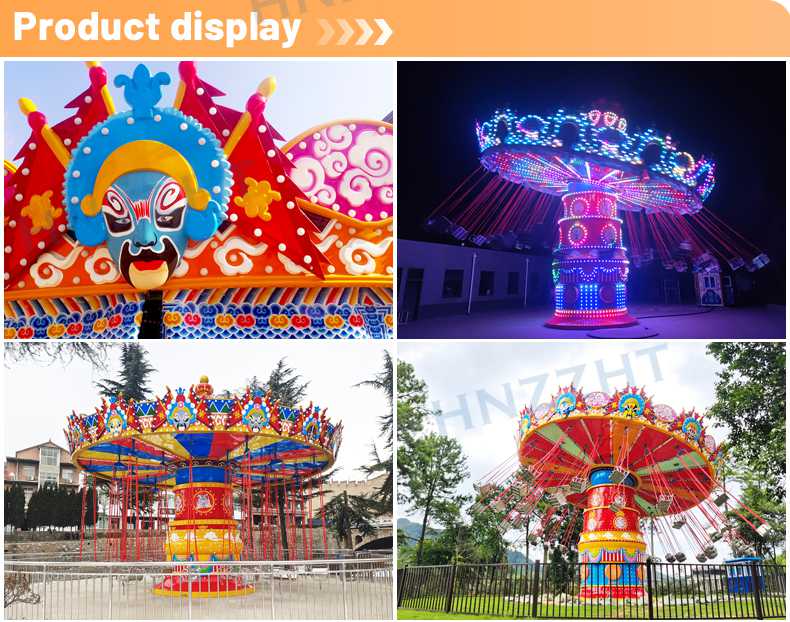
- Themed Styling: The canopy can be customized in various styles such as opera facial masks, marine creatures, cartoon IP, European palace, or aerospace technology. For example, integrating Chinese opera mask styling into a flying chair design both preserves traditional culture and creates a unique visual identity.
- Color Schemes: FRP component colors can be customized to the theme; the manufacturer should provide color swatches and confirm paint weatherability.
- Lighting Systems: LED colored lights, chase lights, and spotlights can be configured with multiple lighting mode switching. Premium equipment lighting systems are integrated with the control system to present different effects at different operation stages.
- Audio Systems: High-power audio can be integrated with Bluetooth/USB/broadcast input for background music or safety announcements.
- Seat Styling: Seat shape, color, and material can be customized; some high-end models offer faux leather cushioning for improved comfort.
Customization Considerations
When requesting customization, buyers should note the following:
- Customization increases production lead time and cost; custom content, delivery time, and fees should be clearly specified in the contract;
- Request 3D renderings or 1:1 prototypes for confirmation before mass production to avoid finished products not matching expectations;
- Custom decorations must not compromise equipment safety performance or maintenance access; all added components must undergo strength verification;
- For customization involving IP imagery, buyers must ensure they hold legal authorization to avoid infringement disputes.
Total Cost of Ownership
Hidden Expenses Beyond Purchase Price and ROI Calculation
Many buyers focus only on the ex-factory price when comparing quotes, overlooking the Total Cost of Ownership (TCO). A cheap piece of equipment with a high failure rate may have far higher long-term operating costs than a higher-priced quality unit.
Total Cost of Ownership Breakdown
| Cost Category | Specific Items | Share Reference |
|---|---|---|
| Initial Procurement Cost | Equipment ex-factory price, customization fees | approx. 50%–60% |
| Logistics and Shipping | Domestic road transport or export sea freight, insurance, loading/unloading | approx. 3%–8% |
| Civil Foundation | Excavation, reinforced concrete, anchor bolts, grounding | approx. 5%–10% |
| Installation and Commissioning | Manufacturer technician travel, installation labor, crane rental | approx. 5%–8% |
| Inspection and Acceptance | Special equipment supervisory inspection fee, registration fee | approx. 1%–3% |
| Operating Energy | Electricity (calculated by operating days and hours) | Accumulated yearly |
| Maintenance | Lubricants, consumable replacement, annual NDT, anti-corrosion touch-up | Accumulated yearly |
| Spare Parts Inventory | Motors, reducers, bearings, seals, electrical components, etc. | Procured as needed |
| Labor Cost | Operator and maintenance personnel wages | Accumulated yearly |
Return on Investment (ROI) Calculation Key Points
- Revenue Side: Hourly throughput × ticket price × daily operating hours × annual operating days = annual revenue. Also consider holiday premiums, bundled ticket revenue sharing, and secondary consumption stimulation.
- Cost Side: The above total cost of ownership allocated annually.
- Payback Period: A quality flying chair in a medium-sized park with stable visitor flow typically has an investment payback period of 1.5–3 years; the design service life can reach 15–25 years.
- Sensitivity Analysis: It is recommended to perform pessimistic/neutral/optimistic scenario sensitivity analysis on visitor flow, ticket price, and operating days to avoid decision errors caused by over-optimism.
Cost Awareness:
Do not be misled by ultra-low quotes. If a manufacturer’s quote is significantly below the market average, carefully verify its material specifications, electrical configuration, process standards, and after-sales terms. Low prices often mean specification cuts — and ultimately, the buyer pays the price.
After-Sales Service System
Installation, Training, Maintenance, and Spare Parts Supply
After-sales service is the most easily underestimated yet most impactful aspect of flying chair procurement for long-term operations. With a service life of 15–25 years, a flying chair requires ongoing technical support and spare parts supply. Buyers should formalize after-sales terms in the contract before signing.
Standard After-Sales Service Content
- Installation and Commissioning: The manufacturer should dispatch professional technicians to the site to guide or perform installation and commissioning, ensuring the equipment meets design performance and passes inspection.
- Operator Training: Systematic training for operators and maintenance personnel covering equipment structure, operating procedures, safety precautions, daily checks, and common troubleshooting. Training certificates should be issued upon completion.
- Warranty Period: The industry standard warranty is 12 months from the date of installation, commissioning, and acceptance. Some manufacturers offer extended warranty services. During the warranty period, failures caused by manufacturing quality defects should be repaired or parts replaced free of charge.
- Lifetime Maintenance: After the warranty period, the manufacturer should provide paid lifetime maintenance services including periodic inspections, fault repair, and technical upgrades.
- Spare Parts Supply: The manufacturer should guarantee original spare parts availability for at least 5–10 years after equipment discontinuation. Key spare parts (motors, reducers, PLC modules) should be recommended for appropriate inventory.
- Response Speed: Quality manufacturers commit to responding to fault requests within 2 hours and on-site resolution within 48 hours (domestic). For exported equipment, the methods and costs of remote support and on-site service should be clearly defined.
Maintenance Schedule Reference
| Frequency | Main Maintenance Tasks | Performed By |
|---|---|---|
| Daily | Pre-start check of restraint bars, seat belts, emergency stop button; run 2 cycles to confirm no abnormal noise or vibration; power off, clean, and inspect fasteners after operation | Operator |
| Weekly | Drain pneumatic system filter; check lubrication point oil levels; check electrical terminal tightness | Maintenance Staff |
| Monthly | Check pneumatic line connections for leaks; test motor insulation resistance (≥1 MΩ) and earth resistance (≤10 Ω); inspect chain/wire rope wear | Maintenance Staff |
| Quarterly | Check reducer oil level and top up as needed; grease slewing bearing; check high-strength bolt preload and apply alignment marks | Maintenance Staff |
| Annually | NDT re-inspection of main load-bearing parts and welds; reducer oil change; anti-corrosion inspection and touch-up of metal structures; comprehensive safety performance test | Manufacturer / Inspection Agency |
Buyers should treat the manufacturer’s Operation and Maintenance Manual as an important operational management reference, establish equipment ledgers and maintenance record archives, and retain records for no less than 3 years.
Manufacturer Capability Assessment
R&D, Production Scale, Case Studies, and Export Experience
Choosing a reliable manufacturer is the prerequisite for successful procurement. Faced with numerous flying chair manufacturers in the market, buyers should systematically evaluate from the following dimensions:
Manufacturer Capability Evaluation Dimensions
- R&D and Design Capability: Does the company have an independent R&D team? Can it provide complete technical documentation including structural calculations and electrical schematics? Does it hold independent intellectual property and patents? Leading industry enterprises typically hold dozens of patents.
- Production Scale and Equipment: Factory area, production workshops, CNC machining equipment, shot blasting equipment, paint booths, and testing facilities. Manufacturers with their own factory buildings and complete production lines offer far greater quality controllability than trading companies that assemble from outsourced parts.
- Industry Standing and Reputation: Is it a member or president unit of the industry association? Has it received provincial/municipal famous trademark, technology enterprise, or contract-honoring honors? While not mandatory, these reflect the company’s standardization and credibility.
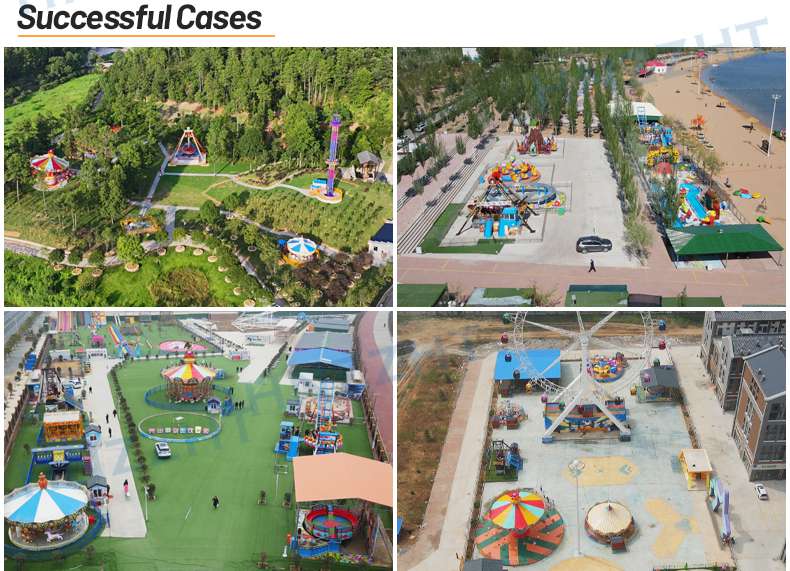
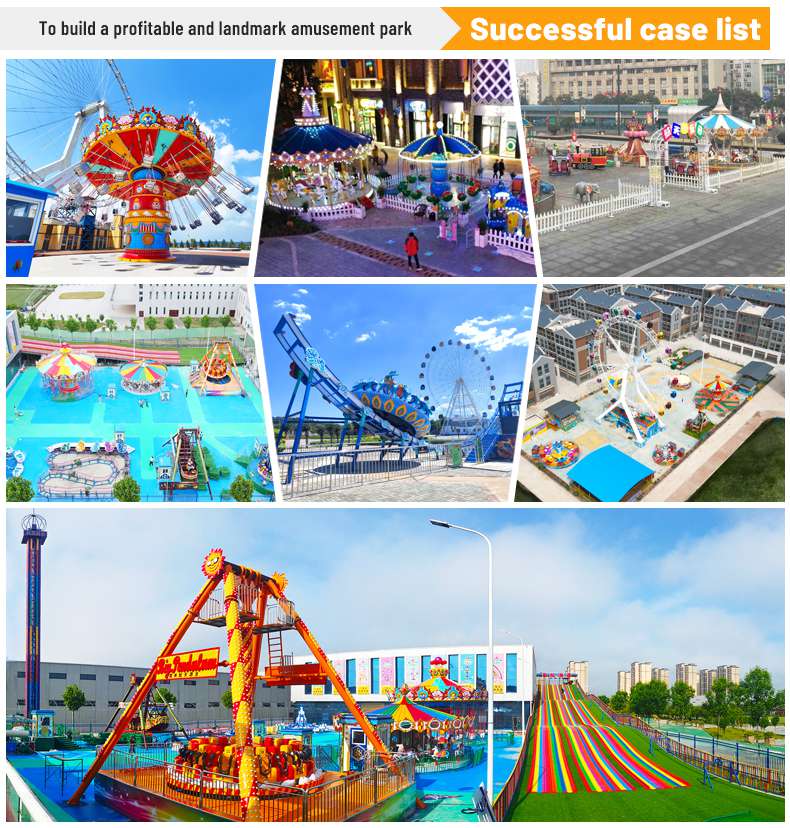
- Project Case Studies: Request a list of similar equipment installations from the past 3 years, including client names, equipment models, and installation dates. When possible, visit operating equipment to assess actual performance and customer feedback.
- Export Experience: For buyers with export needs, the manufacturer’s export experience is particularly important. Manufacturers with years of export experience are familiar with international certifications, sea-freight packaging, and overseas installation, significantly reducing export risks. Manufacturers whose products have been exported to Russia, the USA, France, the UAE, Kazakhstan, and other countries typically offer more reliable product adaptability.
- Financial Stability: Check the manufacturer’s business registration, legal risks, and operational anomalies through the National Enterprise Credit Information Publicity System to avoid companies on the verge of closure or entangled in disputes.
On-Site Inspection Recommendations
For large procurement amounts, on-site inspection is strongly recommended:
- Review actual production conditions in the workshops to confirm the manufacturer is not a “shell” or “private-label” company;
- Inspect the raw material warehouse to confirm brands and specifications of steel, FRP, and electrical components;
- Examine equipment under production, observing welding quality, rust removal processes, and painting procedures;
- Review the quality control department’s testing equipment and inspection records;
- Engage with technical and after-sales personnel to assess their professional level and service attitude.
Procurement Pitfall Guide
Common Traps and Preventive Measures
Drawing on industry experience, the following are the most common traps in flying chair procurement and corresponding preventive measures:
Common Traps
- Specification Cuts After Low-Bid Award: Some manufacturers win bids at low prices, then cut costs during production by reducing steel wall thickness, using no-name motors and electrical components, or reducing painting processes. Prevention: specify brand, specification, and material standards for major components in the contract, and conduct item-by-item acceptance upon delivery.
- Qualification Borrowing or Out-of-Scope Production: Small factories bid using large companies’ qualifications, while actual production is done by unqualified workshops. Prevention: verify that the production address matches the license address, and conduct on-site factory inspections.
- Unfulfilled After-Sales Promises: “Lifetime free maintenance” is promised before signing, then excuses or high fees are charged afterward. Prevention: clearly specify after-sales terms (warranty period, response time, spare parts pricing, on-site service fees) in the contract.
- Delivery Delays: Manufacturers delay delivery due to insufficient capacity or poor management, affecting project opening schedules. Prevention: specify delivery time and delay penalties in the contract, and follow up on production progress regularly.
- Inspection Failure: Equipment fails special equipment supervisory inspection due to design or manufacturing defects, making legal operation impossible. Prevention: select mature models with valid type test certificates, and promptly submit for inspection after installation.
- Vague Technical Parameters: Parameters in promotional materials do not match actual equipment — for example, actual rotational speed is lower than advertised, reducing the ride experience. Prevention: use the technical parameter table as a contract attachment, and conduct measured acceptance after installation.
Key Contract Clause Checklist
The procurement contract should include at least the following key clauses:
- Equipment model, technical parameters, and configuration list (as contract attachment);
- Material and component brand/specification detail sheet;
- Delivery time, delivery location, and transportation method;
- Installation/commissioning scope and acceptance criteria;
- Warranty period, warranty scope, and after-sales service terms;
- Payment method and schedule (typically 30% deposit, 60% before shipment, 10% after acceptance);
- Liability for delayed delivery and quality issues;
- Intellectual property and confidentiality clauses;
- Dispute resolution method (recommend jurisdiction at the buyer’s location court).
Conclusion
Rational Procurement for Long-Term Win-Win Partnership
Procuring a flying chair ride is not a one-time transaction but a partnership lasting 15–25 years. Buyers should adhere to the principles of “safety first, quality as foundation, service for the long term,” and on the premise of certification compliance, comprehensively evaluate the equipment’s technical performance, material craftsmanship, electrical configuration, customization capability, total cost of ownership, and after-sales service system, selecting a quality manufacturer with genuine R&D and manufacturing capabilities.
A carefully selected flying chair ride is not only an iconic attraction that draws visitors to the park, but also a reliable partner that continuously generates revenue and carries visitors’ joy. We hope the ten core questions examined in this article help buyers establish a clear evaluation framework amid abundant market information, and make rational decisions that meet both immediate needs and long-term value.
For further information on specific model technical parameters, customization options, or quotations, we recommend contacting directly a professional manufacturer holding a Special Equipment Production License and rich export experience for one-on-one project consultation.
Reference Standards and Sources:
- GB 8408-2018 Safety Code for Large-Scale Amusement Rides
- GB/T 18161-2020 General Technical Requirements for Fly-Tower Amusement Facilities
- GB/T 8918 Important Purpose Wire Ropes
- Special Equipment Safety Law of the People’s Republic of China
- Safety Supervision Regulations for Large-Scale Amusement Facilities