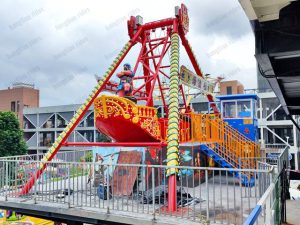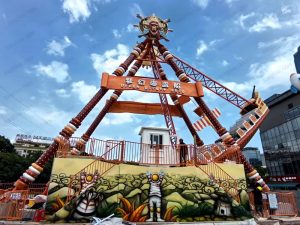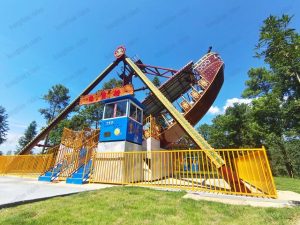
Installing a pirate ship ride requires more than selecting an attractive attraction. Operators need to consider site planning, foundation strength, safety systems, electrical installation, professional commissioning, and final inspection. Proper preparation helps ensure safe operation and a reliable visitor experience.
Site Planning and Space Requirements
A pirate ship ride requires a carefully planned installation area that provides enough room for the ride itself, passenger circulation, safety clearance, and routine maintenance. The available site should be evaluated before the equipment is ordered.
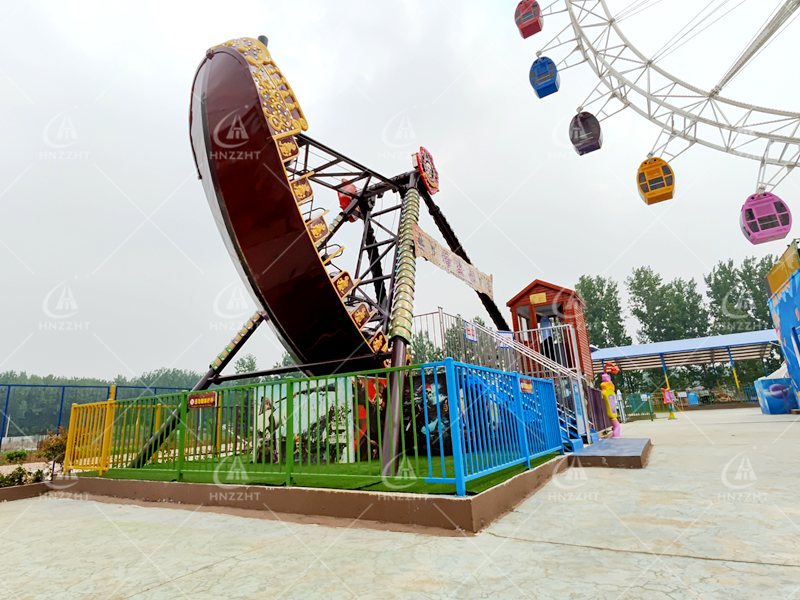
The foundation area must be prepared according to the structural and installation requirements of the selected ride. The ground should provide adequate bearing capacity and stability, while drainage should be considered for outdoor installations.
Operators should also plan the entrance, exit, queue area, surrounding barriers, and emergency access routes. Proper layout helps maintain smooth passenger flow and supports safe daily operation.
Structural and Foundation Requirements
The main structure must be installed on a stable foundation designed for the ride. A professional Amusement Park Equipment Manufacturer should provide technical drawings and foundation requirements so the site can be prepared accurately before installation.
The foundation should be level and strong enough to withstand the dynamic loads generated during operation. Anchor positions and embedded components must match the installation drawings to prevent alignment problems.
Before assembly begins, the foundation should be inspected for dimensions, strength, levelness, and anchor positioning. Any deviation should be corrected before the main structure is installed.
Safety Systems and Passenger Protection
Safety is one of the most important requirements when installing a Pirate Ship Attraction. The ride should include appropriate passenger restraint systems, emergency stop functions, electrical protection, mechanical safety components, and clearly visible passenger instructions.
The seating area should provide secure restraints and adequate protection for riders. Operators should also establish clear loading procedures, passenger restrictions, and emergency response procedures before opening the attraction.
All safety devices should be tested during commissioning. The ride should not be opened to the public until the installation team and responsible operators have confirmed that the equipment operates normally and that required safety functions respond correctly.
Electrical and Mechanical Installation
A pirate ship ride depends on coordinated mechanical and electrical systems. The drive mechanism, braking system, control cabinet, sensors, lighting, and other electrical components must be installed according to the equipment documentation.
A qualified Amusement Ride Manufacturer can provide installation guidance covering wiring, grounding, control systems, mechanical connections, and commissioning procedures. The power supply should be stable and suitable for the selected configuration.
After installation, no-load and operating tests should be completed. Operators should check movement, abnormal noise, vibration, emergency stopping, electrical protection, and control functions before passenger operation begins.
Professional Installation and Commissioning
Installation should be carried out by trained personnel familiar with amusement ride structures and operating systems. The process normally includes foundation inspection, structural assembly, mechanical connection, electrical installation, safety system checks, and trial operation.
Commissioning should verify that the ride moves smoothly throughout its operating range and that all safety devices function correctly. Operators should receive training covering normal operation, passenger management, emergency handling, inspection, and routine maintenance.
Documentation should be kept for installation, testing, maintenance, and acceptance. Clear records can make future inspections and troubleshooting more efficient.
Compliance, Inspection, and Final Acceptance
Before a pirate ship ride is opened, the operator should complete the inspections and acceptance procedures required by the applicable local regulations and project standards. Requirements can vary by country, region, equipment configuration, and installation site.
The final review should cover the structure, foundation, restraints, electrical systems, controls, emergency stop functions, signage, passenger area, and surrounding safety zone. Any outstanding issue should be resolved before public operation.
Working with an experienced equipment supplier and following the approved technical documentation can reduce installation risks and support reliable long-term operation. With proper planning, professional installation, thorough testing, and regular maintenance, a pirate ship ride can become a strong attraction for an amusement park.