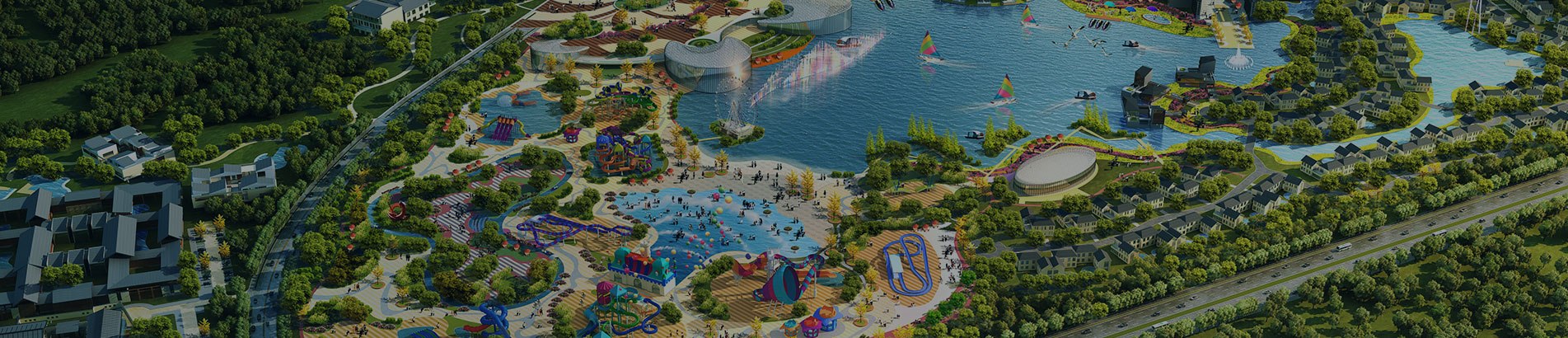
Why Do Theme Parks Order Custom Carousel Rides Instead Of Standard Models?
A theme park carousel is more than a ride: it is usually the first thing a family sees at the gate and the backdrop for most of the photographs taken on opening day. A standard model delivers the ride itself, while a custom build delivers the ride plus a visual identity that belongs to one park only. The difference is not decoration added at the end; it is decided during design, when the diameter, the theming, the lighting and the music are chosen together.
Custom Carousel Rides are built around a specific site and a specific audience rather than around a catalogue page. The starting question for most buyers is not how large the ride should be, but what role the carousel should play in the park: a signature centrepiece, a quiet family anchor beside a thrill zone, or a compact indoor attraction for a shopping centre or family entertainment centre. Once that role is clear, the technical decisions become much easier to make.
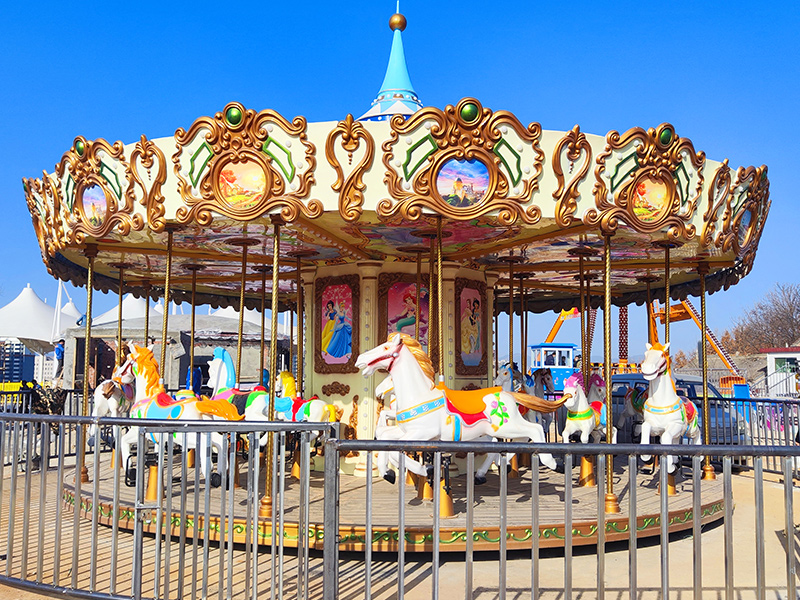
What Customization Actually Covers
Customization is often described as a colour choice, but a real custom carousel changes several layers at once. The diameter and the number of rows determine how many riders can be seated at one time. The horses, animals or themed vehicles may be standard moulds with a custom finish, or completely new figures developed for the park. The canopy, the fascia panels, the base skirt and the centre column are all surfaces that can carry a park’s own artwork or a licensed character programme.
Lighting and sound belong in the same conversation. An LED package with warm, dimmable lighting suits a heritage-style park, while a full colour-changing retro-fit to music suits a modern entertainment complex. Because the lighting and the audio system are installed under the canopy and inside the centre column, they must be planned before the electrical drawing is finalised, not added after the ride arrives on site.
- Diameter, number of rows and per-cycle passenger capacity.
- Figure style: classic horses, animals, vehicles or park mascots.
- Canopy shape, colours and printed artwork panels.
- LED lighting package with fixed or colour-changing effects.
- Music and announcement system integrated into the ride control.
- Platform finish, entrance gates and queue-line signage.
Designing For The Space You Actually Have
A carousel needs a clear circle, and the clear circle needs to stay clear. The swept envelope of the ride is only the beginning: the design also has to account for the safety fence, the queue area, the exit route and the space needed to service the drive. On a tight site, the difference between an 18-metre and a 12-metre platform is often the difference between fitting the ride beside an existing path or having to rebuild the path.
The ground conditions matter as much as the plan view. A permanent installation normally uses a reinforced concrete foundation sized by the manufacturer, while a travelling or relocatable unit uses a steel base with levelling points. Where the site drains poorly, the base detail should keep standing water away from the drive and the electrical enclosure. Buyers who send a site plan, photographs and a ground survey before the quotation stage usually avoid the most expensive surprises.
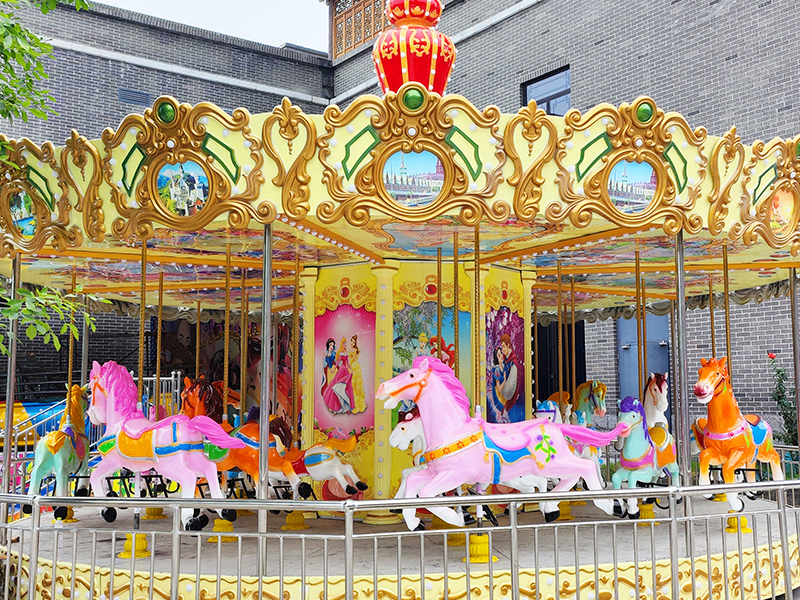
Capacity, Cycle Time And Revenue
Throughput is the number that decides whether a carousel pays for itself. A small three-row ride may seat a few dozen passengers, while a large platform with multiple rows can carry considerably more, but the real figure is the number of cycles completed in an hour, including loading and unloading time. Attendants who are trained to load a full platform quickly, with clear gates and a simple restraint check, will move far more guests than a faster ride with a slow boarding routine.
Because a carousel appeals to small children, grandparents and everyone in between, it usually runs a long, steady day rather than a short burst of thrill traffic. That profile favours reliability and low maintenance over extreme speed. It also means the ride benefits from a design that is easy to inspect: accessible drive components, clearly marked lubrication points and a control cabinet that a technician can reach without dismantling the platform.
Carousel Rides for Theme Parks are normally ordered with a capacity target tied to the park’s master plan, not only to today’s visitor numbers. A ride sized for the second or third season avoids the awkward situation of replacing a platform two years after opening.
Safety, Standards And Daily Operation
A modern carousel protects riders through several independent layers. The drive system is enclosed and guarded, the platform edge is fenced with gates that are interlocked so the ride cannot start while a gate is open, and the control system enforces a fixed start, run and stop sequence. Emergency stop buttons are placed where an attendant can reach them without stepping into the swept area. Each horse or vehicle carries a restraint or a handle arrangement suited to its design.
Riders with limited mobility, very young children and accompanying adults all need a clear boarding rule, and that rule should be printed on the entrance sign rather than explained verbally at the gate. The daily opening check follows a written list: fence and gates, restraint condition, platform surface, lighting, audio, the empty test cycle and the emergency stop test. A short log of these checks is the simplest evidence a park can produce during an inspection.
- Interlocked entrance and exit gates with a visible status indicator.
- Guarded drive, brake and rotation components.
- Emergency stop reachable from the operator position.
- Written daily checklist and a maintenance log kept on site.
- Height and accompaniment rules displayed at the entrance.
From Drawing To Opening Day
A custom build follows a predictable sequence. Concept drawings and a general arrangement drawing confirm the footprint and the visual direction. A detailed drawing set then covers the foundation loads, the electrical supply, the platform assembly and the anchoring. Production starts after the drawings and the artwork are approved, which is why changes to colour or figure style are much cheaper before that point than after it.
Shipping a large platform means planning the container split: the canopy and the larger frame sections usually dictate how the ride is packed. On site, assembly follows the manufacturer’s manual with a supervised first installation, and the commissioning stage includes an empty test run, a loaded test run and a demonstration of every safety function for the operating team. Training the attendants on the actual controls installed, rather than on a generic manual, is the step that most often prevents early operational problems.
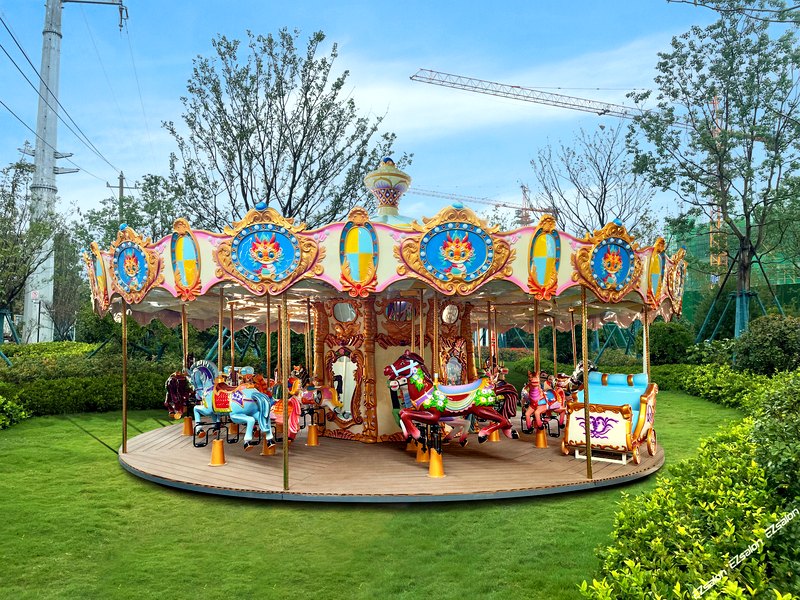
Comparing Suppliers And Budgets
When comparing Carousel Rides for Sale, ask each supplier to quote the same scope so the numbers can be read side by side. The quotation should separate the ride, the foundation drawing and civil work, the shipping packaging, the installation supervision and the commissioning support. A low figure that excludes foundation design or on-site supervision is not a lower price; it is a smaller scope.
Ask a prospective Carousel Ride Manufacturer for the drawings that will be issued for construction, the electrical load and supply requirements, the restraint specifications, the recommended spare-parts list and the maintenance intervals. Request references from parks of a similar size and climate, and ask how artwork is approved before production. A supplier who can answer these questions with documents rather than descriptions is usually the safer partner for a custom project.
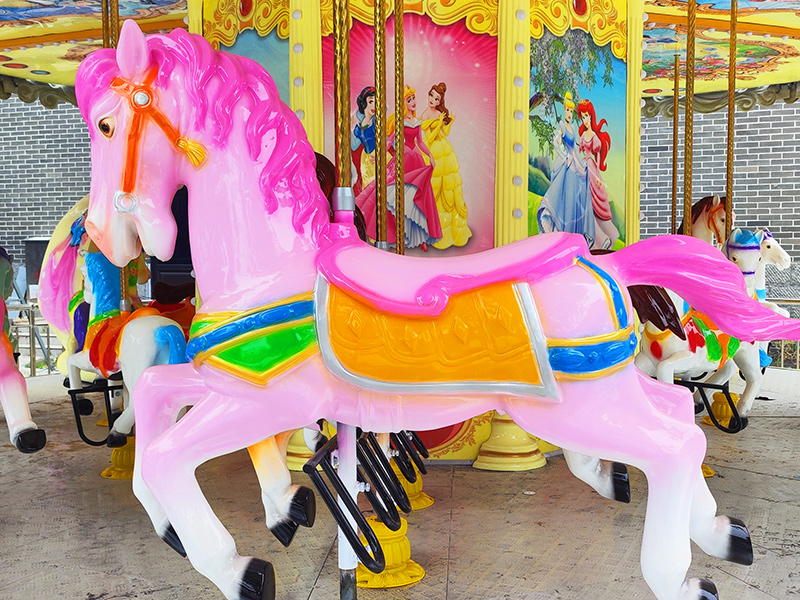
A well-planned Theme Park Carousel Ride keeps earning for years because it is loved by the guests who cannot ride anything else, and because it photographs beautifully at every hour of the day. Decide the role, measure the site, lock the theming early and compare quotations on equal scope, and the ride you open will still be the ride your park wants a decade later.
Contact us today for a free catalogue and a design proposal for your carousel project.