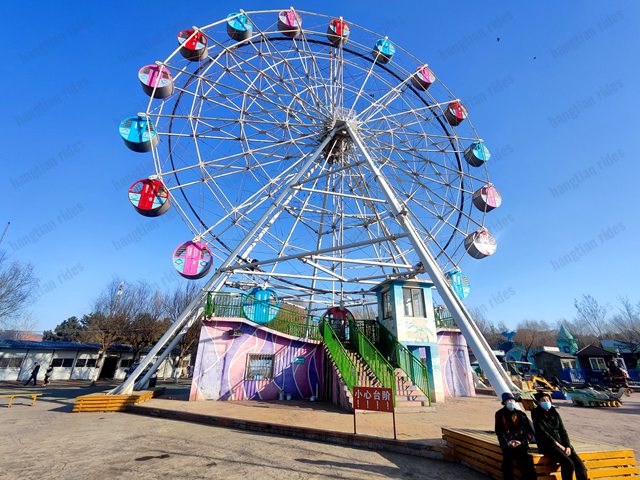
The iconic
amusement park Ferris wheel remains a centerpiece of skyline attractions worldwide, but few consider the engineering marvel hidden within its cabins. Whether you’re sourcing a
small Ferris wheel for sale for a local fair or dreaming of a
backyard Ferris wheel for sale, understanding cabin weight is paramount for safety, installation, and operational success. Here’s a breakdown of the factors determining Ferris wheel cabin weight and why it matters.
1️⃣ Key Factors Influencing Cabin Weight
- Size & Capacity: Standard amusement park Ferris wheel cabins seating 6-8 passengers typically weigh 1,500–3,000 lbs (680–1,360 kg). Larger cabins for 10+ riders can exceed 5,000 lbs (2,270 kg) due to reinforced structures and amenities like air conditioning **.
- Materials:
- Steel frames dominate large installations, adding significant mass but ensuring durability.
- Aluminum alloys reduce weight by 25–40% for portable or backyard Ferris wheel for sale models, though load capacity decreases.
- Glass panels (common in modern cabins) add 200–500 lbs versus acrylic alternatives.
- Features & Customization: Enclosed cabins with HVAC systems, lighting, or themed interiors increase weight by 15–30% compared to open-air designs.
2️⃣ Weight Implications for Buyers
- Installation & Foundation: A standard amusement park Ferris wheel cabin requires reinforced foundations capable of bearing dynamic loads (weight + motion forces). For a 6-person cabin, foundations must support at least 2.5x its static weight (≈7,500 lbs). Backyard models need compact concrete bases rated for 1,000–2,000 lbs.
- Transport & Logistics: Shipping a disassembled cabin for a small Ferris wheel for sale demands specialized freight. A single 2,000-lb cabin may require flatbed trucks and crane loading—costs surge for oversized/overweight cargo.
- Power Requirements: Heavier cabins necessitate higher-torque motors. An 8-passenger cabin needs motors generating ≥50 HP, while backyard units operate on 5–15 HP.
3️⃣ Case Study: Small-Scale vs. Amusement Park Cabins
| Cabin Type |
Capacity |
Avg. Weight |
Use Case |
| Backyard Mini |
2 riders |
300–500 lbs |
Residential/events |
| Portable Fair |
4 riders |
600–800 lbs |
Carnivals, temporary setups |
| Theme Park Standard |
6–8 riders |
1,800–3,000 lbs |
Permanent amusement parks |
4️⃣ Procurement Tips for Buyers
- Verify Load Testing Data: Demand certificates confirming cabins underwent stress tests at 150% of max operational weight.
- Optimize for Portability: If considering a small Ferris wheel for sale, prioritize aluminum-framed cabins with modular designs.
- Account for Total Costs: Cabin weight directly impacts:
- Shipping fees (oversize charges)
- Crane rental (200–500/hour)
- Concrete foundation depth (≥24″ for permanent installations).
5️⃣ Safety: Why Weight Tolerance is Non-Negotiable
Exceeding a cabin’s weight limit risks catastrophic failure. In 2019, a European fair incident was traced to unaccounted decorative additions increasing cabin mass by 17%. Always:
- Factor in passenger weight (avg. 170 lbs/person).
- Include accessory weight (speakers, safety rails).
- Confirm gondola balance across the wheel—mismatched weights strain motors.
Conclusion: Balancing Dreams and Physics
Whether investing in a colossal
amusement park Ferris wheel or a charming
backyard Ferris wheel for sale, cabin weight dictates feasibility, safety, and ROI. By prioritizing certified materials, precise engineering specs, and realistic load calculations, operators ensure their Ferris wheel remains a soaring triumph—not a grounded liability. Remember: In this high-stakes industry, gravity never negotiates.
Key Takeaway: Always request a cabin’s dry weight (unoccupied) and max gross weight (occupied) specifications from manufacturers. For small Ferris wheel for sale options, target models with ≤800-lb cabins to simplify installation and reduce long-term maintenance.