
How Do I Choose A Pirate Ship Ride For My Park?
Start from the site and the guest, not from the catalogue. Measure the clear area and the height you can actually use, decide how many riders you need to move per hour, and then match the seat count, the swing height and the restraints to that plan. Only after those three numbers are fixed should you compare models, because a Pirate Ship Ride that is too large for the site or too small for the queue becomes an expensive compromise either way.
The pirate ship is one of the most recognisable rides in any park, and it is also one of the most forgiving: it appeals to children, teenagers and adults, it can be themed in many directions, and it delivers a strong sensation without the extreme forces of a coaster. That combination makes it a popular investment, and it also makes the range of available models very wide. Choosing well means narrowing the range with facts about your own site before you look at prices.
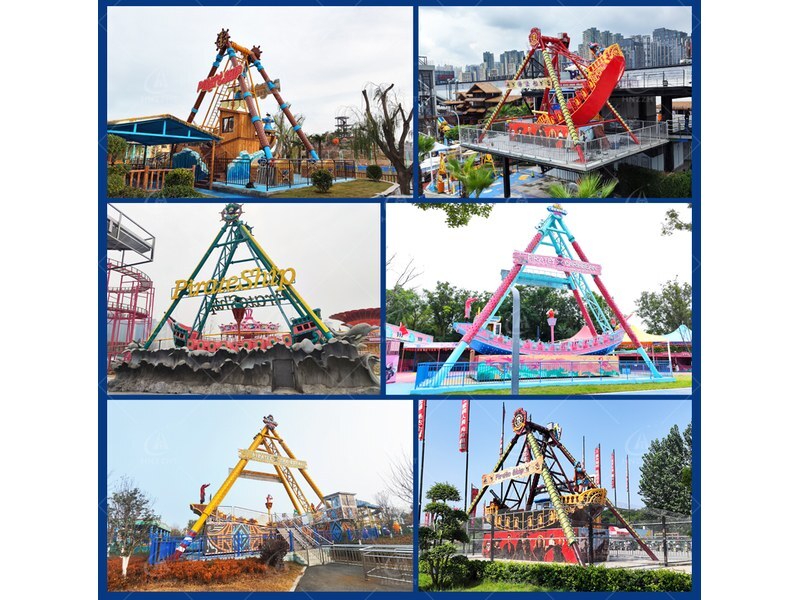
Begin With The Site And The Guest Profile
The site sets the first hard limits. A swing ride needs a clear footprint that includes the swept area of the hull at full amplitude, the loading platform, the queue and the exit. The support columns and the overhead structure also need clearance above and beside them, and the fence line has to sit outside everything that moves. On a compact plot, a smaller model with a lower pivot height may be the only machine that fits with a usable queue.
The guest profile sets the second limit. A park that caters mainly to families with young children will get more use from a modest ride with a lower height requirement and a gentle amplitude, while a destination park with a thrill audience can justify a larger hull, a higher pivot and a longer cycle. Visiting the site at peak time and watching how queues form around existing rides tells you more than a capacity table alone.
- Clear footprint including the swept area at maximum swing.
- Available height for the pivot and the support structure.
- Access route for the delivery vehicle and the assembly crane.
- Expected mix of families, teenagers and adults.
- Ground conditions and the foundation options available.
Seat Count, Cycle Time And Real Capacity
Seat counts on a Viking Ship Ride range from small family units to large hulls that carry dozens of passengers per cycle. The number printed in the specification is the maximum, not the throughput. Hourly capacity is the seat count multiplied by the number of cycles per hour, and the cycle time includes loading, restraint checks, the ride itself and unloading. A large hull with a slow boarding routine can move fewer guests than a smaller one with a well-organised platform.
Two practical details decide how quickly a platform turns over. The first is the restraint system: individual lap bars that lock automatically are much faster to check than a manual arrangement. The second is the gate layout, with separate entry and exit points so that the next group can be staged while the previous one leaves. Both are design choices that can be specified at the order stage.
Swing Height, Restraints And Ride Feel
The sensation of a pirate ship comes from the arc, not the speed. A larger pivot height and a wider amplitude produce a longer pendulum swing with more time spent at the top, which is what riders describe as the floating moment. A smaller machine with a shorter arc delivers a quicker, tighter motion that suits younger guests. Neither is better in absolute terms; they are different products for different audiences.
Restraints should match the motion. Lap bars are the standard for a swinging hull because the forces push riders back into the seat rather than out of it, and the seat shape holds the body in place. What matters is the condition of the locking mechanism, the clearance of the bar against the rider and the ease with which an attendant can see that it is engaged. Ask for the restraint specification and the recommended daily check procedure rather than judging from a photograph.
Price And The Total Cost Of Ownership
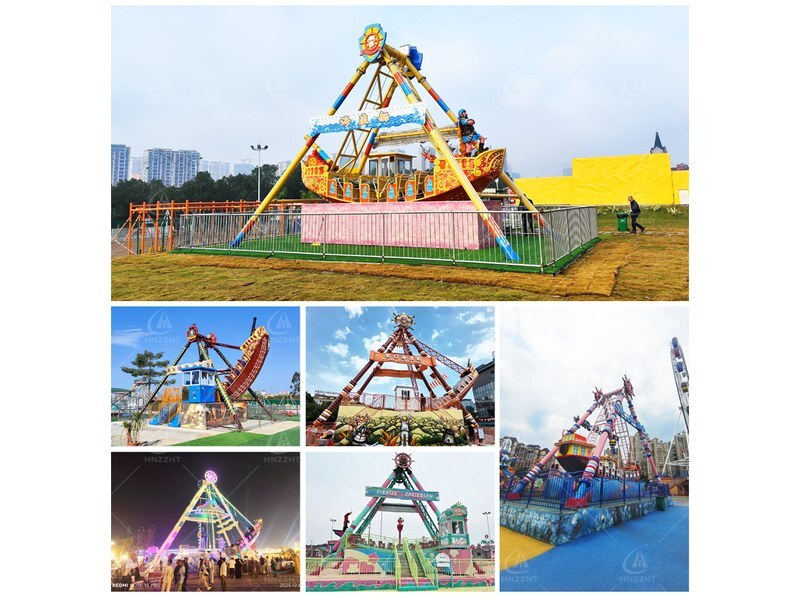
Comparing a Pirate Ship Ride for Sale on price alone usually leads to a surprise later. The quotation should be read as a scope, not as a number: does it include the foundation drawing, the anchoring, the electrical cabinet, the lighting, the theming and the installation supervision? A low offer that leaves out the foundation design, the delivery packaging or the commissioning support is not cheaper once those items are added back.
Total cost also includes the operating side. Power consumption per cycle, the maintenance intervals for the drive and the bearings, the cost of restraint spares and the labour needed for a daily inspection all add up over a season. A machine with accessible drive components and a widely available standard gearbox will cost less to keep running than one with proprietary parts that have to be shipped from abroad every time something wears out.
- Scope of supply: foundation drawing, anchoring, electrical cabinet, lighting.
- Theming included or quoted as an extra.
- Installation supervision and commissioning support.
- Power consumption and starting current.
- Spare-parts list, warranty period and response time.
Checking The Supplier Before You Sign
A Pirate Ship Ride Manufacturer should be able to answer technical questions with documents: a general arrangement drawing, a foundation load drawing, an electrical schematic, a restraint specification and a maintenance schedule. Ask which standards the equipment is built to, how each unit is tested before shipment and what the inspection record contains. A supplier who can produce these immediately is usually one with a stable production process.
References are worth as much as certificates. Ask for parks that installed a similar model two or three years ago and, where possible, speak to the operator about how the ride has performed through a full season. Delivery history matters too: a manufacturer that has shipped to your region knows the packaging, the documentation and the port requirements that the shipment will need.
Installation, Training And Long-Term Operation
Installation follows the manufacturer’s manual and should be supervised by someone who has assembled the same model before. The base and anchors are completed first, the support structure is erected and levelled, the hull and the drive are assembled, and the electrical system is connected and tested. Commissioning then runs an empty cycle, a loaded cycle and a demonstration of every safety function before the ride opens to guests.
Training the operating team on the actual machine is the step that protects both guests and the investment. Attendants should be trained on restraint checking, height measurement, start and stop procedures, the emergency stop, evacuation and the daily checklist, and the maintenance team should be trained on the lubrication points, the brake and drive inspection and the fault reporting process. Written procedures kept at the control position make all of this repeatable when staff change.
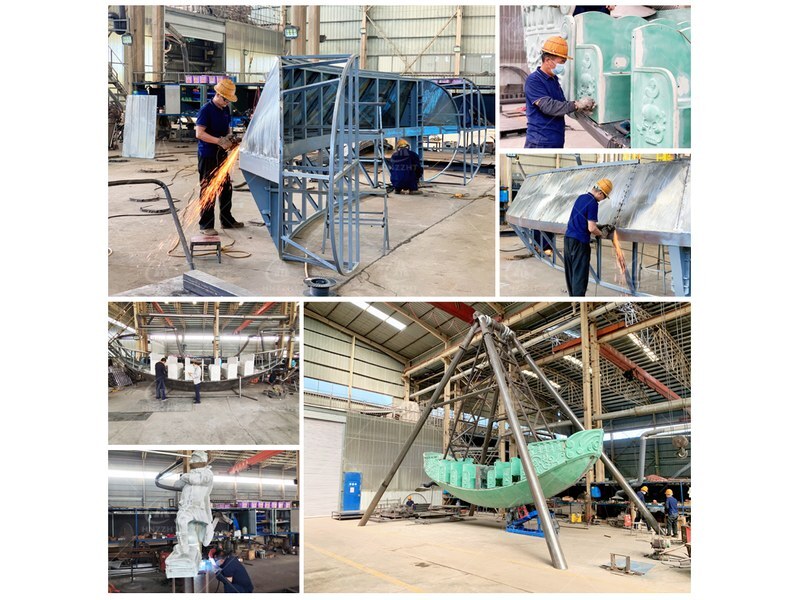
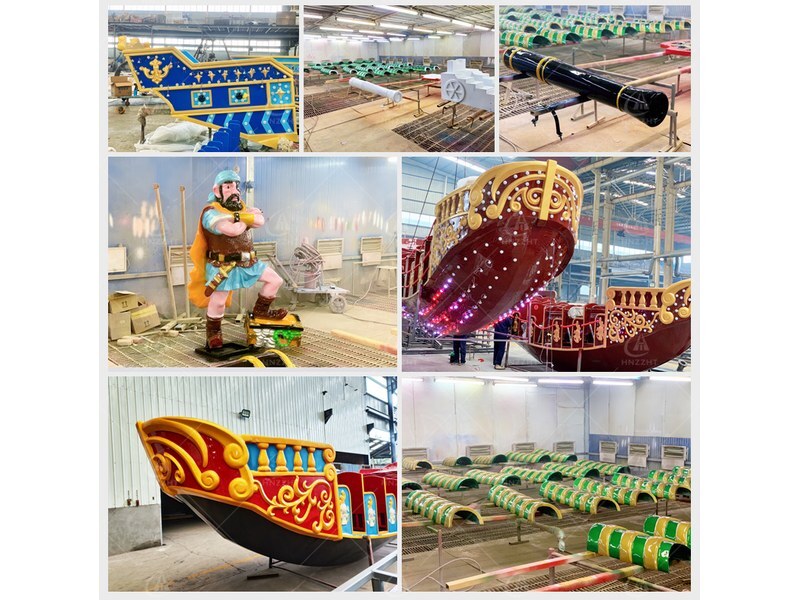
Choosing an Amusement Park Pirate Ship Ride comes down to four decisions made in the right order: the site envelope, the audience, the capacity target and the supplier’s ability to document the machine. Get those right and the ride will fit, the queue will move, and the maintenance team will be able to keep it running for the whole season.
Contact us today for a free catalogue and a layout proposal for your pirate ship ride project.