Why Does A Drop Tower Feel So Much More Extreme Than The Numbers Suggest?
A Drop Tower Ride sells an experience, not a height. The lift is slow and predictable, the pause at the top lets the rider look down, and then the fall arrives with almost no warning. What follows is not a true free fall either: the machine controls the descent and stops it within a designed distance. The excitement comes from the sequence, the view and the feeling in the stomach, and understanding that sequence explains why the ride works.
Guests rarely describe a drop tower in terms of metres or seconds. They describe the climb, the moment the gondola stops, the drop of the stomach and the braking. Drop Tower Thrills are engineered around exactly those moments, and every design decision, from the height of the tower to the profile of the brake, is made to shape them.
The Four Phases Of A Single Cycle
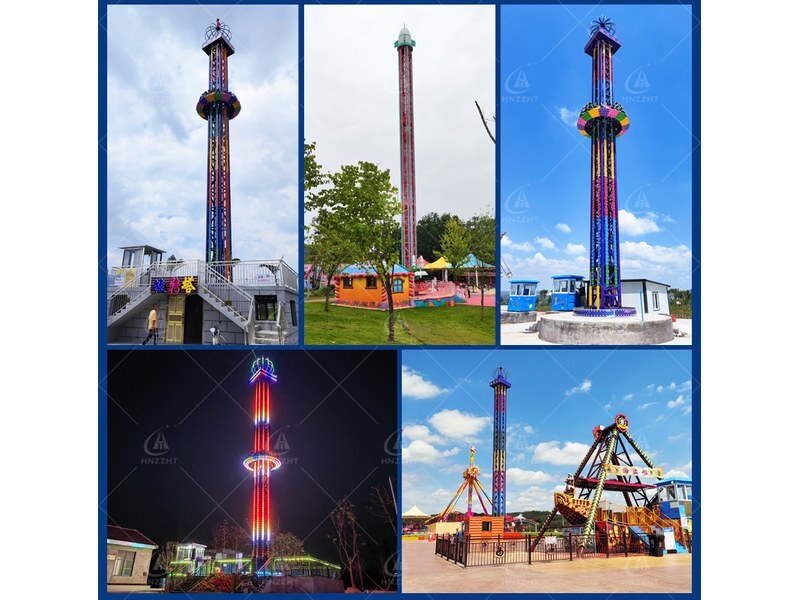
A drop tower cycle has four distinct phases, and each one is engineered separately. The ascent is a controlled lift at a modest speed, chosen so that passengers have time to settle and to watch the ground recede. The hold at the top is a pause, often a few seconds, that lets anticipation build and gives the operator a clear visual check of the gondola position. The release is the start of the descent, and the braking phase decelerates the gondola to a controlled stop at the loading position.
The ascent is deliberately gentle compared with the fall. Accelerating upward quickly would compress the anticipation into a few seconds and would also demand far more from the lift system. A slow climb also keeps the drive and the cable or chain under lower peak load, which reduces wear and makes the whole structure simpler to maintain.
The pause at the top is the cheapest and most effective part of the experience. Nothing moves, yet the perceived intensity peaks, because the rider is looking down with nothing between them and the ground but the restraint. Many operators treat the length of the hold as a setting worth tuning for the audience: shorter for a busy family day, slightly longer for an evening crowd that wants the suspense.
Free Fall, Controlled Fall, And The Difference Riders Feel
A true Free Fall Ride would accelerate under gravity alone, and a tall tower would then need an enormous braking distance to stop safely. Real machines control the descent instead. Some release the gondola almost freely for the first part and then brake progressively; others regulate the speed from the start. The result feels like falling while remaining inside a designed envelope.
That difference is what riders notice in their bodies. A restrained fall produces a strong float in the stomach during the first moment, then a firm, progressive push as the brake takes over. A faster, less restrained descent produces a sharper float and a harder brake. Both are safe when correctly designed; they simply deliver different sensations, and buyers should ask which profile the machine they are considering was tuned for.
- Ascent speed sets the tone of the build-up.
- Hold time at the top controls anticipation.
- Braking profile decides whether the stop feels soft or abrupt.
- Total cycle time, including loading, drives hourly throughput.
Magnetic, Pneumatic And Hydraulic Braking
The braking system is the part of a drop tower that turns a dangerous idea into a safe machine, and it is also the part that most affects how the ride feels. Eddy current magnetic brakes are the most common solution on modern towers: as a conductive fin passes through a magnetic field, eddy currents are induced that oppose the motion, and the resistance rises with speed. The brake has no wearing friction surface, so its behaviour stays consistent over millions of cycles.
Pneumatic systems use air pressure to cushion the gondola, with the air acting as a spring and damper that absorbs energy over the stopping distance. Hydraulic systems achieve a similar result with oil and controlled valves. Both can be tuned by changing pressure or valve settings, which lets the manufacturer adjust the feel of the stop. All three approaches need different maintenance routines: magnetic brakes need cleanliness and inspection of the fin gap, pneumatic systems need seals and pressure checks, hydraulic systems need fluid quality and leak inspection.
G-Forces And Rider Comfort
Riders feel force as a multiple of their own body weight. During the free-fall phase the sensation is close to zero, which is the float they describe; during braking it rises, and the peak value is set by how quickly the gondola is brought to rest. Designers keep the braking deceleration within limits that a healthy guest can tolerate comfortably, and they extend the stopping distance rather than push the peak load higher.
Restraints and seat geometry matter as much as the numbers. A rider who is held firmly against the seat with a proper lap or shoulder restraint experiences the stop very differently from one who slides forward. The seat shape, the position of the handles and the way the restraint locks all influence comfort at the moment of braking, and they are the reason a well-designed small tower can feel smoother than a taller machine with a sharper stop.
How The Physics Shapes The Structure
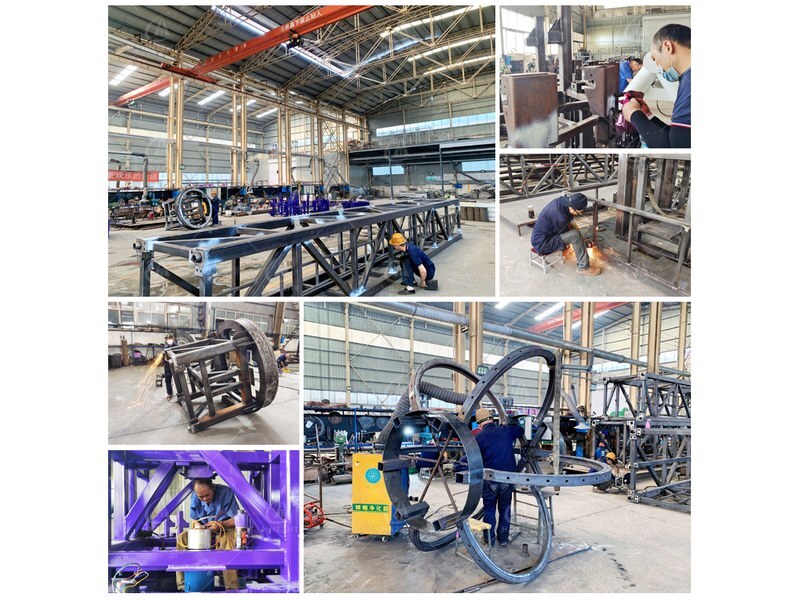
The tower is not simply a column; it is a structure designed for a very specific loading pattern. The braking phase produces the largest loads, because the whole moving mass has to be decelerated within the stopping distance, and those loads are transferred through the gondola, the guide system and the tower itself. Foundation design follows from those loads, which is why a taller tower needs a substantially larger base than the height alone would suggest.
Wind is the other structural input. A slender tower at full height presents a large surface to the wind, and the guide rails must keep the gondola running true even when the structure deflects slightly. That is why taller installations usually include wind monitoring, with the ride held at the base when gusts exceed a set threshold. It is a routine operational control, not a sign of a weak design.
What This Means When You Buy One
A buyer comparing a Drop Tower Ride for Sale should look past the height figure and ask about the cycle. How fast is the ascent, how long is the hold, what is the braking type and what is the stopping distance? Those four answers describe the guest experience far better than a tower height, and they also describe the maintenance workload the park is taking on.
Ask a prospective Drop Tower Ride Manufacturer for the foundation load drawing, the wind operating limit, the restraint specification and the recommended inspection intervals for the brake system. Confirm the power supply, the compressed-air or hydraulic requirements if applicable, and the spare-parts list for the brake and the guide system. On a tall ride, those components are the ones that determine long-term reliability.
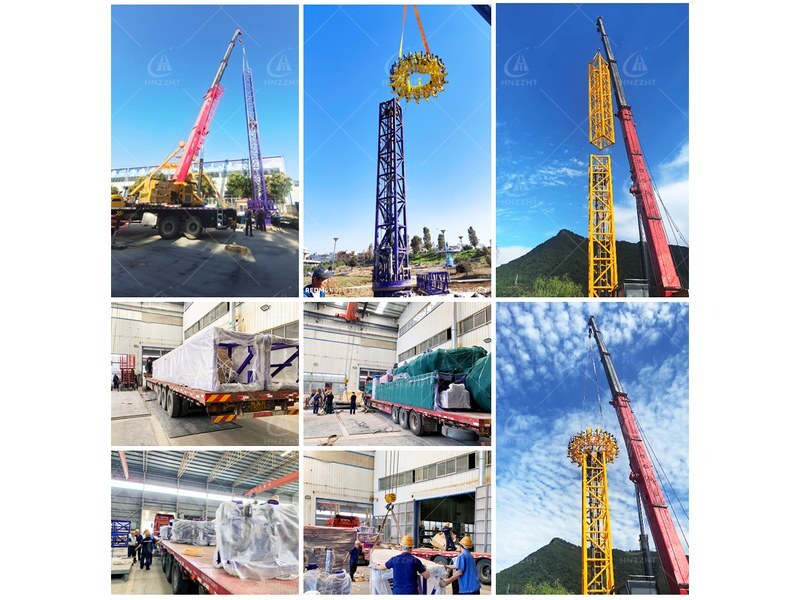
The science behind a drop tower is straightforward once the phases are separated: a gentle climb, a deliberate pause, a controlled fall and a progressive brake. Understanding that sequence is useful for operators too, because it turns vague guest feedback into something a maintenance team can check. If riders say the stop feels harsh, the brake profile and the restraints are the places to look; if they say the ride feels tame, the hold time and the release are the settings to review.
Contact us today for a free catalogue and a technical proposal for your drop tower project.