
How do you choose the best Pendulum rides manufacturer in China?
Almost every quotation for a swinging ride looks similar on paper: a seat count, a swing angle, a height and a price. The difference between a machine that runs for fifteen years and one that spends its first summer under repair is decided long before the invoice, in the way the supplier designs the structure, controls the welding, tests the brakes and supports the ride after delivery. This guide sets out what to check when you compare a Pendulum Rides Manufacturer, so the choice is based on evidence rather than on the lowest number in the inbox.
Start With The Ride Figures, Not The Price
The first questions to a supplier are technical, not commercial. How many guests does one cycle carry? What is the maximum swing angle, the highest point of the arm, the rotation speed and the cycle time? What installed power does the drive need, and what load does the machine put on each foundation point? A supplier who answers these questions from a specification drawing is working from a real design; one who answers only with “we can make any size you want” is usually quoting a copy.
Ask for the layout drawing that carries those numbers together with the seat layout, the boarding position and the fence line. The drawing is the document your civil contractor, your electrician and your insurer will all read, so it should exist before the contract rather than after it.
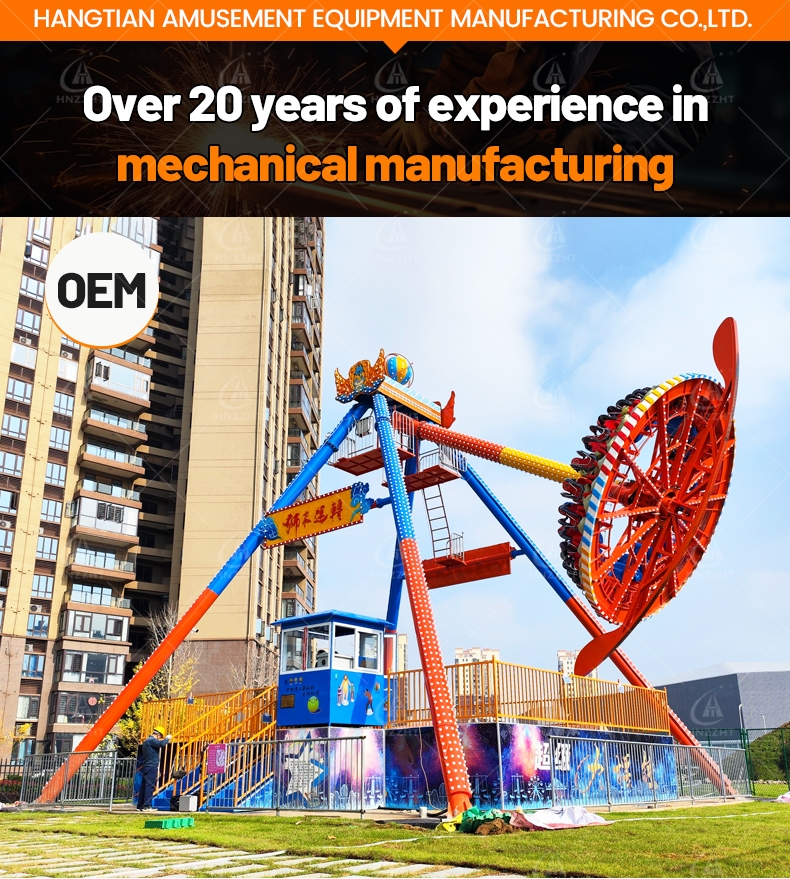
Then match the figures to your park. A large 360-degree machine needs a plot, a queue lane and a viewing area that a mid-size unit does not, and a ride that is slightly too big for the space leaves the operator with a queue that never clears on a busy Sunday. Capacity per hour is usually the honest measure of value, because it is the number that turns ticket income into a return on the machine.
Steel, Welding And The Build Quality You Can Check
An Amusement Park Pendulum Ride lives with fatigue. The arm reverses direction several times a minute for years, so the quality of the steel and the welds matters far more than the paint finish. Ask which grade of structural steel is used for the main arm and column, what wall thickness the tubes have, and how the weld seams are inspected before the frame leaves the workshop.
Good practice is visible in three places, and all three can be checked remotely with photographs and video before you travel:
The main arm and column joints are welded, ground and inspected, with no filler covering a gap and no weld crossing a stress point without reinforcement.
Bearings, slewing rings and drive components are branded parts with traceable part numbers, not unbranded substitutes fitted to save a few dollars.
Corrosion protection is a full process: shot blasting, primer, intermediate coat and topcoat, with the thickness measured rather than estimated.
Ask for the material certificates and the paint specification sheet. A supplier who can produce them without delay is far more likely to be building the machine the drawing describes, and those documents also make the ride easier to register and inspect in your own country.
Safety Systems, Testing And Paperwork
Safety equipment is where a cheap quotation quietly saves money. A modern pendulum ride should carry redundant braking, an overspeed and over-swing limit, mechanical locks on every restraint, an emergency stop at the operator panel and at the boarding gate, and an interlock that prevents a cycle starting until every harness is closed.
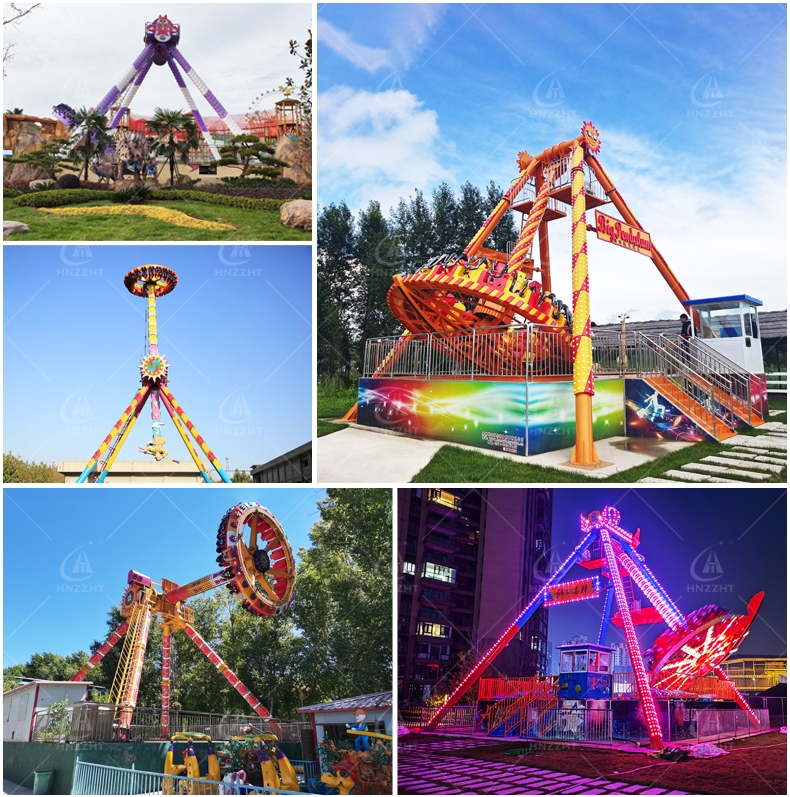
Then comes testing. Ask how the finished machine is run before shipment: how many empty cycles, how many loaded cycles, whether the brakes are tested at full speed, and who signs the test report. A supplier who films the test run and hands over the record is giving you proof; a supplier who only promises “we test every ride” is not.
The document set should travel with the machine: general arrangement drawings, electrical schematics, the operation and maintenance manual, the parts list, the test report and the material certificates. If any of those are missing, the first repair or the first inspection becomes a research project. When you look at a Pendulum Ride for Sale, treat the file as part of what you are buying.
Customisation For Your Park And Your Plot
Most buyers do not want a catalogue machine in a catalogue colour. Seats can be arranged for adults, for families or for children; the gondola can be open or enclosed; lighting can be programmed to the park’s theme; and the boarding side can be reversed so the queue fits the walkway you already have.
A Custom Pendulum Ride is a normal request for an experienced workshop, but the conversation has to happen before the steel is cut. Send the plot drawing, the guest profile, the available power supply and the theme references, and ask the supplier to return an updated drawing showing how the changes affect the footprint, the foundation and the delivery weight.
Be sceptical of customisation that is only a colour change, and equally sceptical of a workshop that accepts every request without asking about the swing forces. A modified gondola changes the load on the arm, and the supplier should say so and show the recalculation. Custom work that is properly engineered is one of the strongest signs that you are dealing with a real manufacturer rather than a trading office.
After-sales Service, Spare Parts And Training
The purchase decision does not end on delivery day, and the questions that matter most are the unglamorous ones. Who answers the phone when the ride stops on a Saturday? How long does a replacement brake pad, bearing or proximity sensor take to arrive? Are the wear parts standard industrial items that can be bought locally, or proprietary pieces that only the factory can supply?
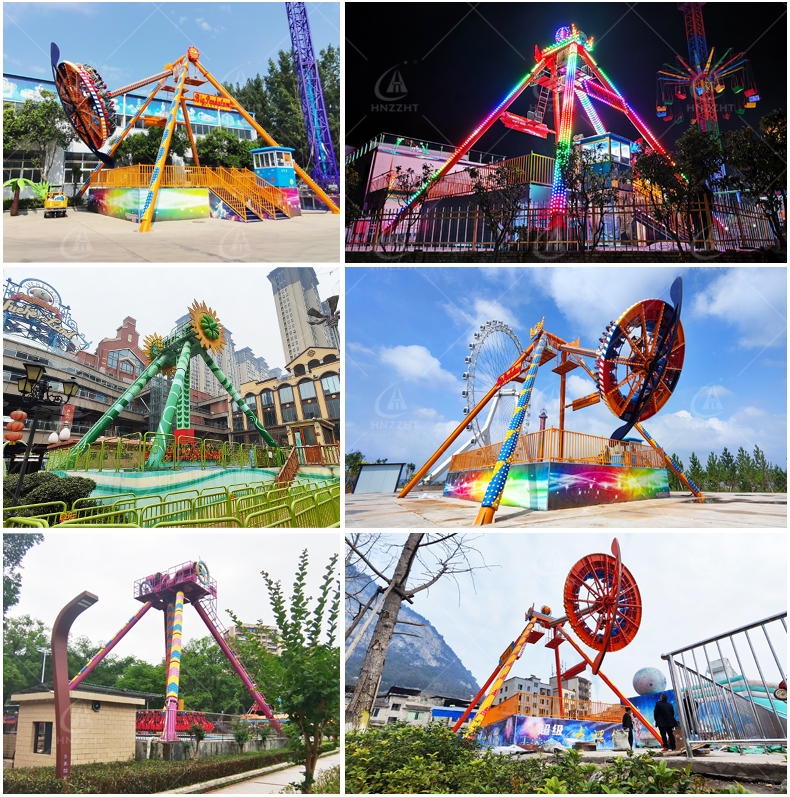
Installation support belongs in the same conversation. Even when the manufacturer sends a supervisor rather than a full crew, that person should be on site for the assembly, the electrical commissioning, the load test and the first training session with your operators. Ask what is included in the price and what is charged per day, so the installation budget is known before the container is booked.
Finally, ask for the maintenance schedule in plain language: daily checks, weekly checks, the torque values that have to be re-tightened, the greasing points and the intervals at which bearings and brake parts are replaced. A supplier who can hand over that schedule, together with a spare parts list priced in advance, has already thought about how the ride will be looked after for the next decade.
Comparing Suppliers Before You Place The Order
With the technical questions answered, the shortlist is usually down to two or three workshops. Compare them side by side on the points that cannot be faked: the completeness of the drawing, the brands of the drive and control components, the testing record, the clarity of the quotation, the response time to a technical email, and the willingness to let you visit the workshop or talk to an existing customer.
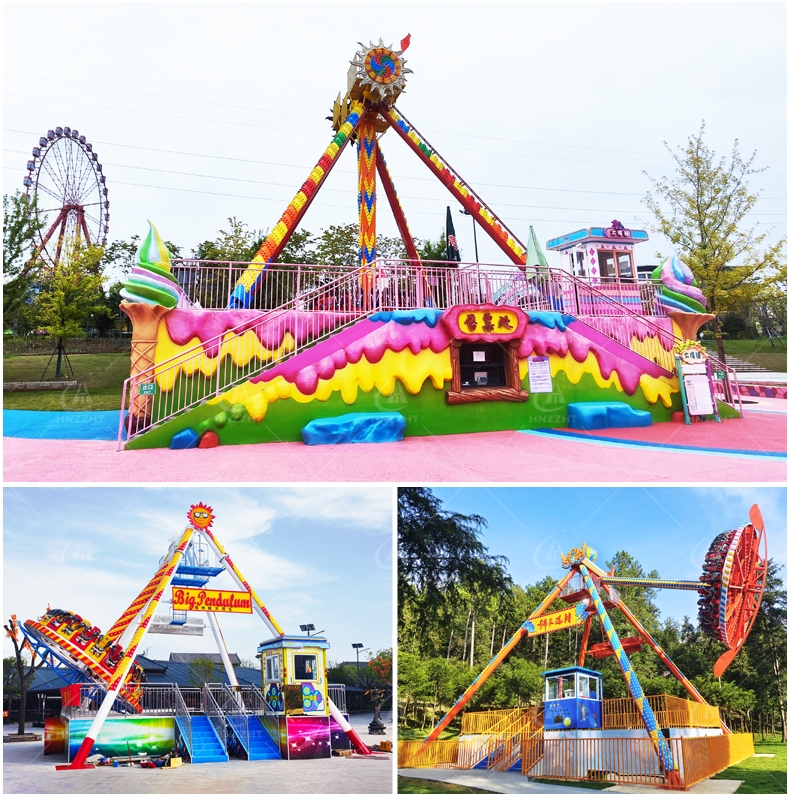
A quote that is far below the others is worth reading twice. It usually means a lighter structure, unbranded components, no test record, or installation support that has been quietly left out. The right comparison is not the price of the ride alone but the price of a ride that can be inspected, operated and maintained without surprises.
Work with a China Pendulum Ride Manufacturer that answers technical questions in writing, documents every stage with photographs, and stays reachable after the balance is paid. Those habits are what carry a project from a signed contract to a ride that guests queue for every evening, and they are the clearest signal of which supplier is worth your order.