
Tips for Choosing a Reliable Flying Chair Ride Supplier
Two quotations for the same flying chair can differ by a factor of two, and the difference is rarely visible in a photograph. It sits in the steel grade, the welds, the chain, the lifting system, the control cabinet and the paperwork that comes with the machine. This article explains how to judge a Flying Chair Ride Supplier on the things that decide whether your ride is still turning smoothly five years from now, and how to ask for that evidence before you pay a deposit.
Start By Defining Exactly What You Are Buying
Before comparing suppliers, decide what the ride has to do. Capacity is the first number: a small machine with twelve seats and a large one with thirty-plus seats are different products with different structures, different footprints and different power requirements. Rotating diameter, maximum height, swing angle, rotation speed and the number of passes per cycle all follow from that, and a supplier who cannot give you a dimensioned drawing of the exact model you are discussing is quoting from memory rather than from a design.
Travelling operators need a machine that folds, transports and reassembles quickly, which usually means a hydraulic lifting column and a folding canopy frame. Permanent parks can trade that flexibility for a heavier structure, an enclosed frame and a fixed foundation. Tell every supplier which of those two you are, and compare only like with like, because a fair comparison is impossible once the specifications drift apart.
Ask also about the guest profile. A family park wants a gentle rise and a long, comfortable rotation; a thrill oriented park wants speed and an unusual tilting motion. Both are built on the same base, but the drive sizing, the restraint design and the operating envelope are not the same, and a good supplier will say so rather than selling you whatever is in stock.
Check Certifications And Real Manufacturing Capability
Certification is the starting point, not the finish line. A serious manufacturer holds the quality management and product certifications required for the markets it serves, and can send you the certificates with the model ranges they cover. Ask which standard the design is calculated against, what the safety factor on the main structural members is, and who signs the load calculation.
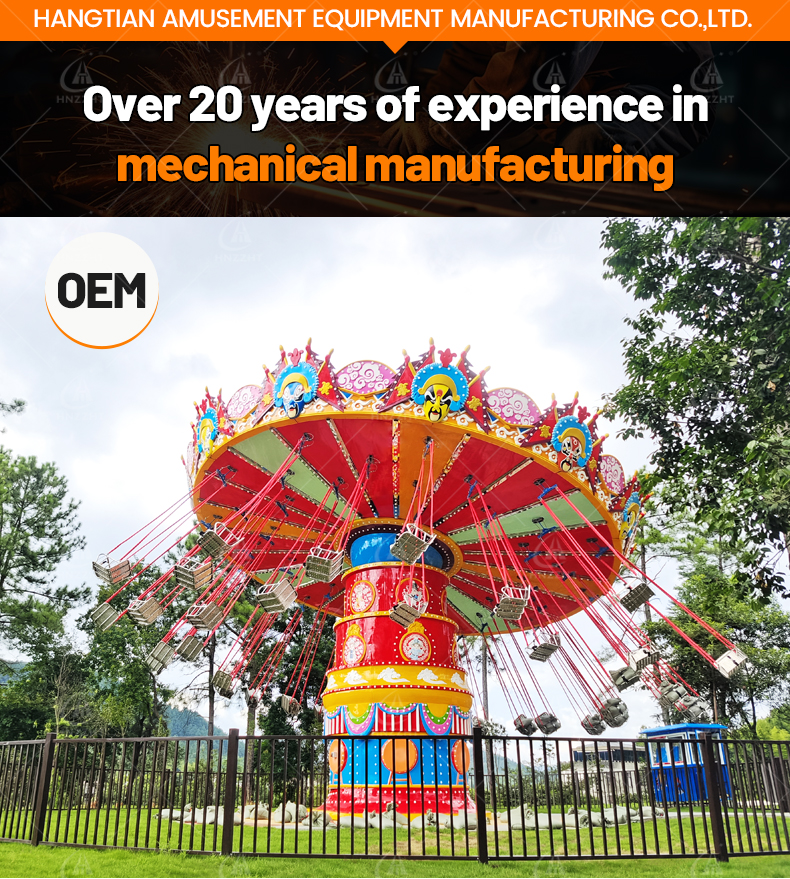
Capability is easier to fake on a website than in a workshop, so verify it. Ask for the factory address and its size, how many welders and how many sets of equipment it runs, whether the steel is cut and welded in house or subcontracted, and whether the factory can be visited or shown live on a video call. A workshop that builds one Chair Swing Ride a week and a workshop that assembles machines from bought in parts photograph very differently once you look at the production floor rather than the showroom.
Reference projects close the loop. Ask for three to five machines of similar size that are already running, with photographs, city and country, and the year of installation. Speak to at least one operator: how long did commissioning take, how many spare parts have been needed, how quickly did the factory answer when something went wrong. One honest conversation is worth more than a full page of marketing copy.
Look At The Steel, The Welds And The Lifting System
Structure decides everything else. The main column, the rotating head and the arm assembly should be built from structural steel, Q235B or better, with the rotating head on a slewing bearing rather than a simple bushing. Chain or wire rope drives are common, and the chain should be a lifting rated product with a defined safety factor, an automatic tensioner and a secondary safety device so that a single chain failure cannot release the chair ring.
Surface protection tells you how seriously the factory treats a machine that will stand outdoors. Hot dip galvanising for the frame and the fasteners, powder coating on covers, and stainless or galvanised fittings on everything exposed to rain should all be specified in writing. Ask for the coating specification in microns and, at handover, for a thickness report, because a wheel that rusts in its first rainy season is expensive to recover.
The lifting system deserves the same scrutiny. A hydraulic column should come with an independent mechanical lock or a burst valve on the cylinder, and the hydraulic power unit should be accessible for service rather than buried under a panel. Where the ride rises on a pneumatic or mechanical system, ask how the lifting movement is monitored, what happens if a limit switch fails and how the ride is brought down safely with guests on board.
Compare Safety Systems And Design Details
Safety on a flying chair is mostly about redundancy. Each seat should have a restraint with two independent locking elements, a seat belt in addition to the mechanical bar, and a release that the attendant controls from outside the ring. Look at whether the restraint can be opened from a ladder if the ride stops in the raised position, and ask how the ride is evacuated with the maximum number of guests on board.
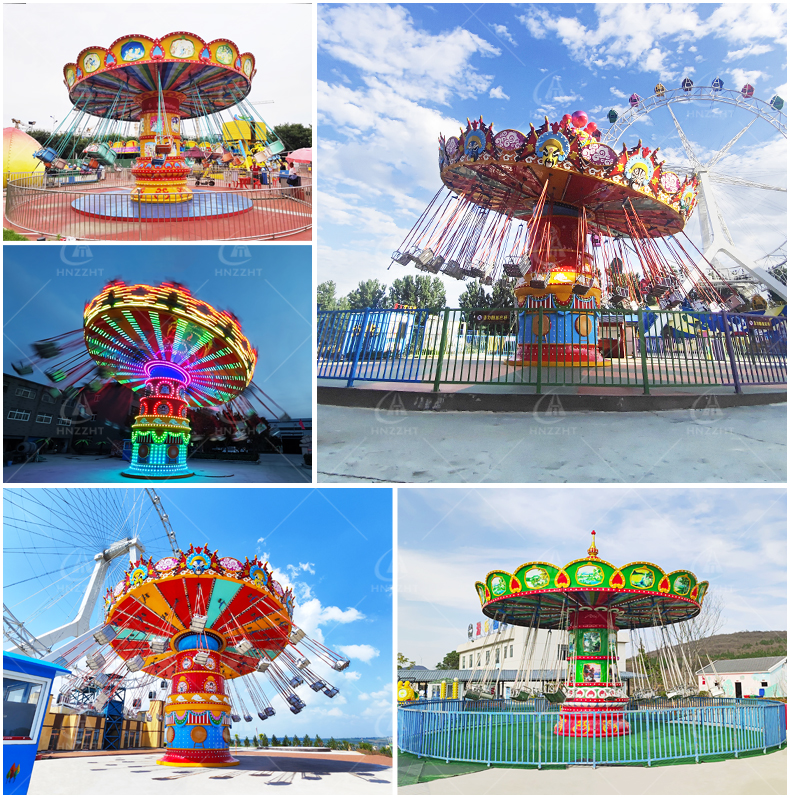
Electrical design is the next layer. Ask for the inverter drive brand and model, the protection rating of the cabinet, the emergency stop arrangement, an overspeed detection and a wind speed monitor if the ride stands high. On any set of Flying Chair Rides For Sale, the difference between a machine that runs for a decade and one that stops weekly is usually in these details plus the quality of the wiring, so request the electrical drawing and the component list and compare them item by item.
Then think about the guest experience on the ground. Boarding height, gate position, lighting for evening operation, the height gauge, the way a nervous child steps onto the platform and the noise of the motor at close range all affect how the ride feels in your park. A supplier who has installed machines in real parks will have answers for those questions before you ask them.
Judge The Documentation And After-Sales Support
Documentation is where a cheap supplier is usually exposed. Ask, before ordering, for the operation and maintenance manual in a language your team reads, the general arrangement and foundation drawings, the electrical diagrams, the load calculation, the steel certificates, the test report and a spare parts list with part numbers. Then ask how long those parts will remain available: a bearing or a hydraulic cylinder is not a problem if the supplier can ship it in a week, but it is a serious problem if the ride is an orphan after two years.
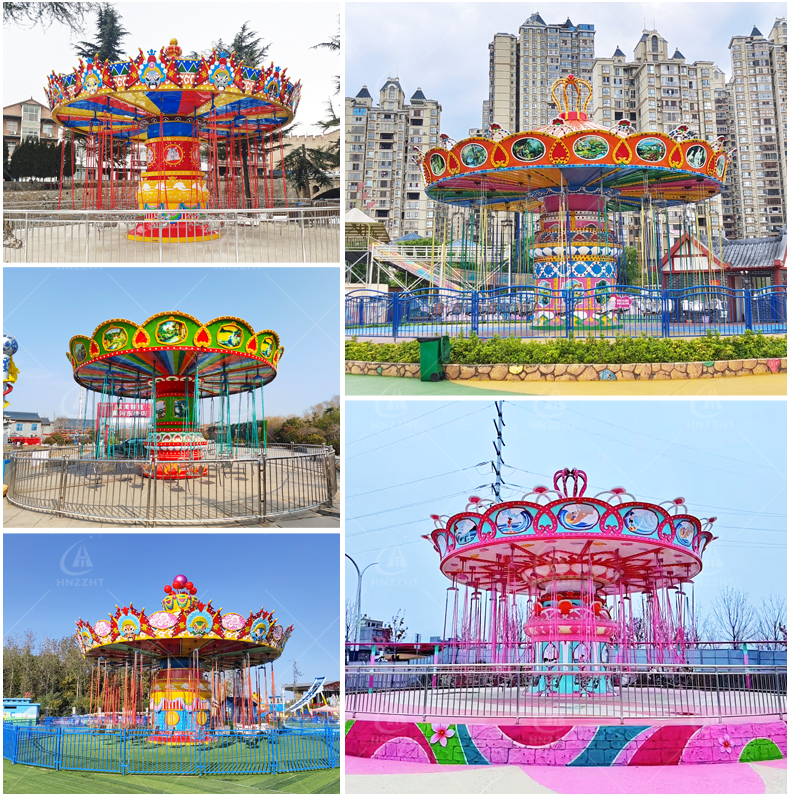
Support terms should be written into the contract rather than promised in a chat. Confirm the warranty period and what it covers, whether installation and commissioning are included or quoted separately, who pays for travel and accommodation of the engineers, how spare parts are shipped and how quickly, and what the response time is for a technical question. For any Flying Chair Amusement Ride that will operate every weekend, a supplier who answers messages within a day is worth more than a discount of a few percent.
Finally, ask for training. A short session on site, covering daily checks, the meaning of the fault codes, the correct way to lubricate the chain and the slewing bearing, and the scheduled replacement of wear parts, prevents most of the problems that appear in the first busy season and gives your own team the confidence to run the machine properly.
Compare Quotes On Total Cost And Risk
The lowest price is rarely the cheapest ride. A quotation should state the exact scope: which steel and coating, which bearings and chain, which drive components, how many spare parts, what documentation, what installation service and what warranty. When two suppliers quote for the same stated scope, the gap narrows quickly, and when it does not, the difference is somewhere in that list.
Put the risk into the comparison as well. A machine delivered late misses your season; a machine that arrives with a missing certificate delays your inspection; a machine with an undocumented control system stops serviceability. Ask for the production and delivery schedule in writing, with milestone dates, and agree what happens if a milestone slips.
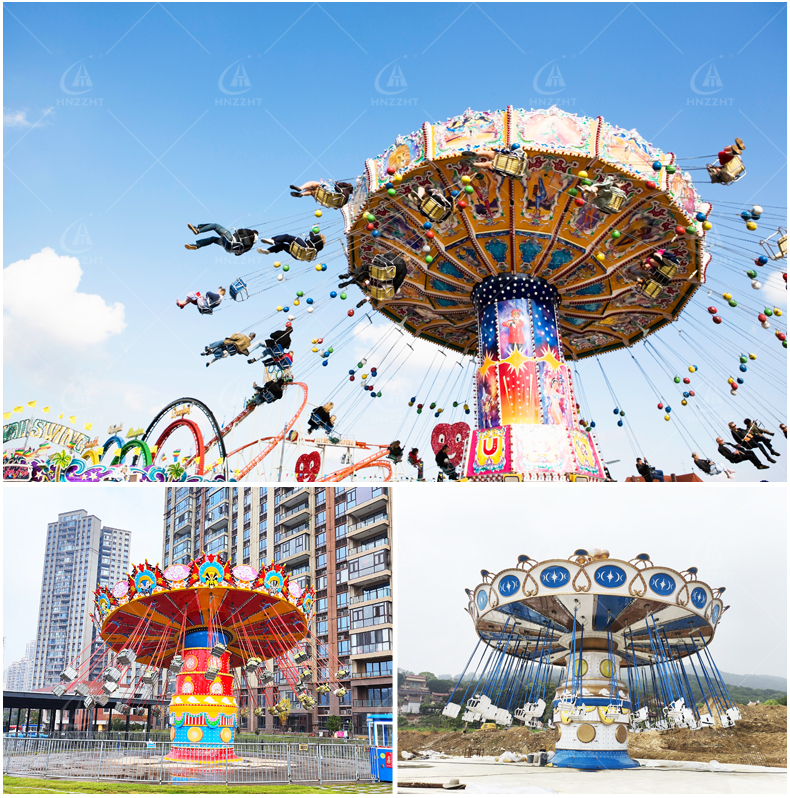
Work through that list with two or three suppliers and the choice usually becomes obvious. The right partner explains the design, invites you to see the factory, answers technical questions with documents, provides references that actually respond, and puts the same commitments in the contract that were made in the conversation. Choose on that basis and the flying chair you buy will keep earning for years rather than becoming a source of downtime, and your park will have a supplier it can rely on season after season.