
What Are The Main Materials Used In The Tagada Disco Ride?
A tagada disco ride looks like one simple piece of machinery: a round deck, a ring of seats and a loud sound system. In reality it is a sandwich of very different materials, each chosen for one job. Steel carries the load, rubber and polyurethane create the bounce, plastics and foam protect the guests, and the electrical parts have to survive rain, dust and heat for years. This guide walks through the main materials used in a tagada disco ride, why each one is picked, and what those choices tell you when you compare a Tagada Ride For Sale from different factories.
The Steel Structure That Carries Every Load
The base frame of a disco tagada is built from welded structural steel. Square and rectangular hollow sections are the usual choice because a tube resists bending in every direction, and most manufacturers work in Q235B carbon steel for the main base, with Q345B or an equivalent higher-strength grade used for the tilting frame and the hub support where the bending moment is greatest. Tube wall thickness normally falls between four and six millimetres on the moving frame, and the base that sits on the concrete is heavier still.
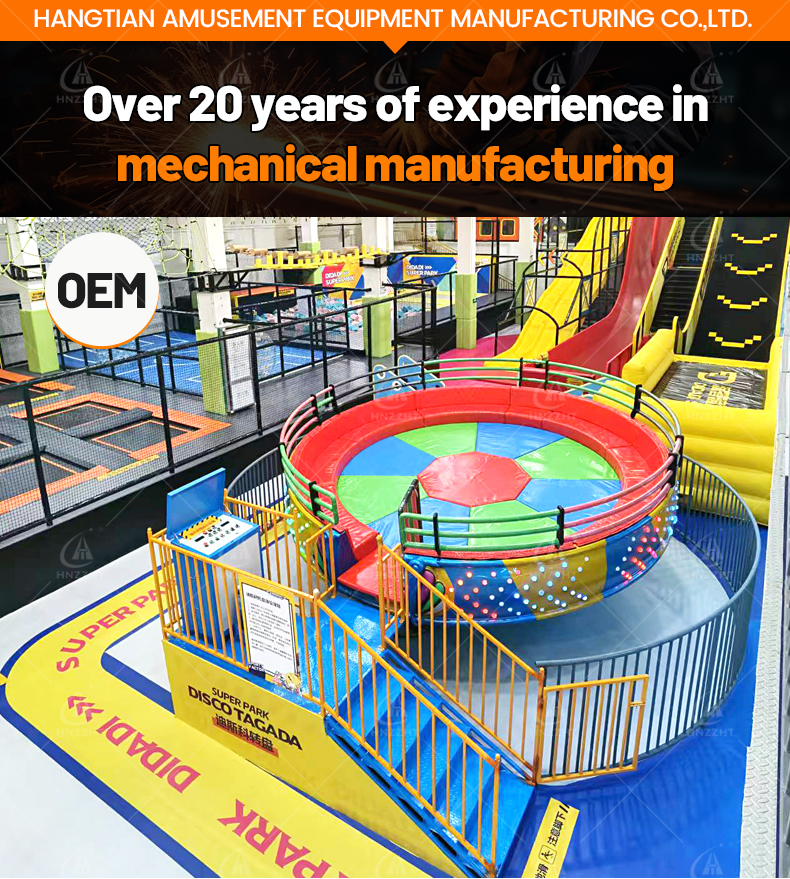
The disc and the tilting frame are cut from steel plate, usually by laser or plasma, then jig welded so that the hub, the arms and the seat rails line up within a few millimetres. That accuracy is what keeps the deck flat and the rotation smooth, and it is also what allows the ride to be assembled on site quickly. After welding, the whole frame is shot blasted to remove mill scale and rust before any paint is applied, because coating over scale is the fastest way to make a new ride look old within two seasons.
Protection on the steel is either a multi-layer paint system or hot dip galvanising. The paint route is normally an inorganic or zinc-rich primer, an epoxy intermediate coat and a polyurethane topcoat, giving a dry film thickness of around 120 to 200 microns. Hot dip galvanising gives a zinc layer of 60 to 85 microns that sacrifices itself to protect the steel, which is why coastal parks and travelling operators usually ask for it. Stainless steel is rarely used for the main frame because of cost and weight, but it is common for small brackets, trim rings and the fasteners that hold them.
Deck, Disc And Floor Materials Under The Guests’ Feet
Guests never see the frame, but they stand on the deck and slide across it every time the disc tilts. The traditional surface is a phenolic resin board, a dense laminate built from kraft paper or glass fibre soaked in resin and pressed under heat. It is hard wearing, dimensionally stable, and it keeps its grip when the deck is wet, which is why it is still the benchmark against which other decks are judged.
Many modern rides use glass fibre reinforced plastic, or FRP, moulded into a single shell that covers both the deck and the edge of the disc. FRP is light, it does not rust, it can be moulded into the curved skirt that hides the mechanism, and a coarse aggregate can be cast into the walking surface for grip. Aluminium checker plate appears on some models as a service area around the hub, and stainless steel is used for the centre hub cover and the trim that passengers hold on to.
Under the deck, the rotation assembly usually runs on tapered roller bearings in a cast or forged steel hub, greased for life or fitted with a remote grease point. The bearing housing is the one place where a material upgrade is almost always worth the money, because a hub failure stops the ride immediately and it is the hardest part to replace in the middle of a season.
Seats, Restraints And Padding Materials
Seat shells are either moulded FRP or rotationally moulded polyethylene. Rotomoulded plastic is tough, it absorbs impact without cracking, and its colour runs through the whole wall thickness so scratches do not show as white marks. FRP gives a smoother finish and sharper shapes, and it is easier to repair locally when a park needs a cosmetic fix. In both cases, the seat is bolted to a galvanised steel subframe that ties back into the disc structure.
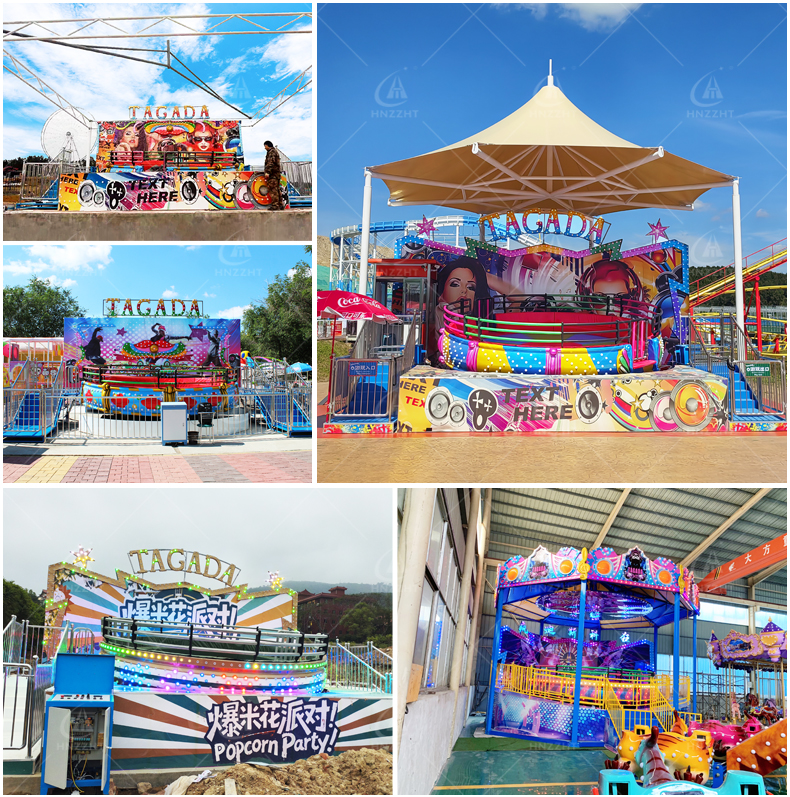
The comfort layer is high resilience polyurethane foam, usually somewhere between 25 and 35 kilograms per cubic metre so that it recovers its shape after thousands of guests. The cover matters just as much as the foam: marine grade vinyl, a PVC sheet with a knitted backing, resists rain, sunscreen and cleaning chemicals, and polyurethane coated fabric is chosen when a park wants a softer touch and better UV stability. Closed cell foam is preferred for the edge padding because it does not soak up water the way an open cell foam does.
Restraints combine strength with easy cleaning. A typical lap bar is formed from stainless steel tube or from galvanised steel with a powder coated finish, and the locking mechanism is usually a machined ratchet or a spring loaded pawl. Where seat belts are fitted instead, they are polyester webbing with a steel buckle, rated for a defined load and replaced on a schedule rather than on appearance. Every one of those parts is easy to wipe down, which keeps the ride presentable on a busy weekend.
Rubber, Polyurethane And The Parts That Create The Bounce
The movement of a tagada does not come from the steel at all. It comes from air springs, support tyres and the drive wheels that push the disc up, down and sideways out of phase. Air springs are rubber bellows with nylon cords moulded inside so that the bag can lift a heavy load without stretching out of shape. The rubber compound, the number of plies and the end plates decide how the ride feels: a stiffer spring gives a sharper bounce, a softer one gives a longer float.
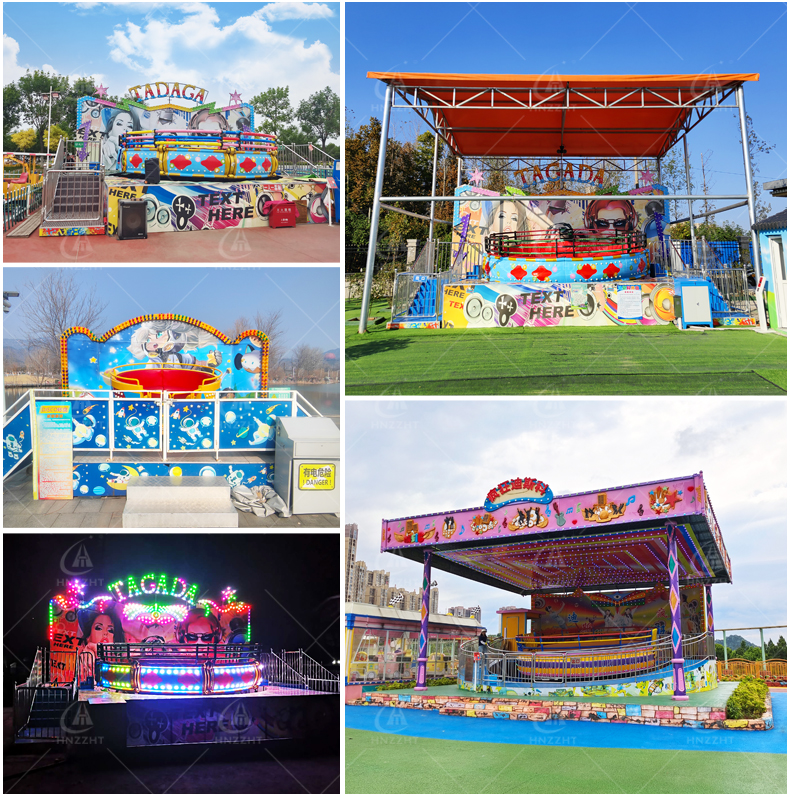
Support and drive wheels are the highest wear items on the machine. Solid rubber wheels are cheap and quiet, while cast polyurethane wheels last longer, hold their shape better under load and resist oil and grit. Cast nylon and MC nylon rollers turn up in guide positions, and the rotation drive itself combines an AC motor with a worm or planetary gearbox in a cast iron housing, often driving a polyurethane tyred friction wheel against the underside of the disc.
All of these materials are consumables rather than permanent fittings. A park should expect to inspect air springs monthly, keep a pair in stock and treat the rubber parts as scheduled replacements, because no rubber compound survives heat, ozone and constant flexing forever. Knowing which material your ride uses is the only way to plan that budget properly.
Electrical, Coating And Weather Protection Materials
The control cabinet is usually built from cold rolled steel sheet between 1.5 and 2 millimetres thick, folded and powder coated, then sealed to IP54 or IP65 depending on how the site is laid out. In coastal parks and on travelling rides, 304 or 316 stainless steel enclosures and a sun shield are worth the extra cost, because a cabinet that fills with humid air will corrode its own terminals from the inside. Inside it, an inverter drive, contactors, a safety relay and a programmable controller manage the rhythm of the ride.
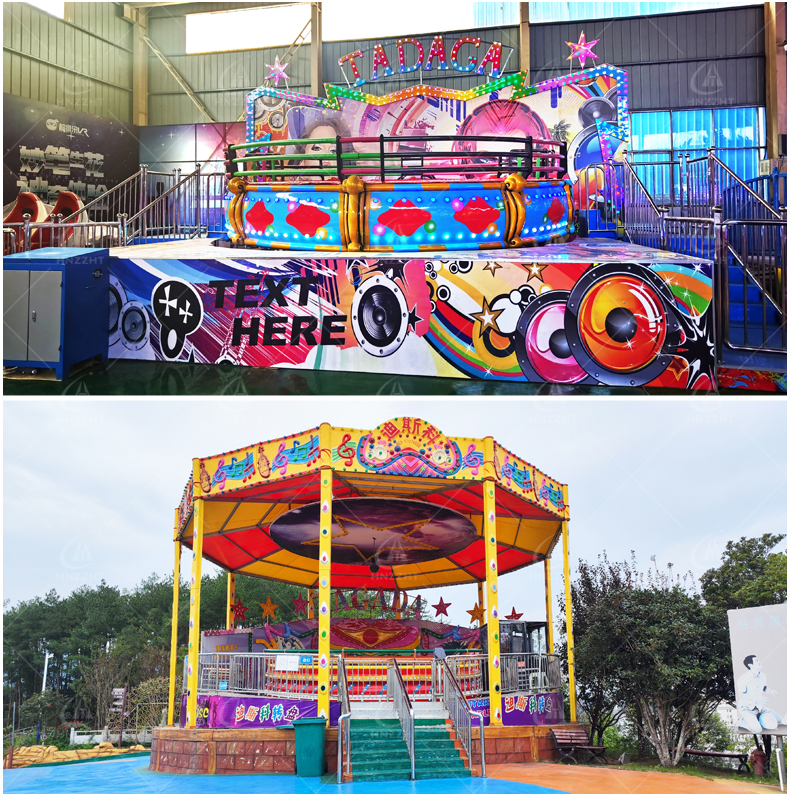
Anything that leaves the cabinet and moves has to be chosen for flex. Copper conductors with an oil resistant PVC jacket are standard, and a polyurethane jacket is used where cables bend constantly or where the ride is cleaned with a pressure washer. Inductive proximity sensors are sealed to IP67, connectors are fitted with gaskets, and every fixing that will be exposed to rain is best specified in A2 or A4 stainless steel.
Lighting has changed the material list of a modern Outdoor Tagada Ride as much as anything else. LED strips and pixel tubes behind polycarbonate diffusers replaced incandescent lamps years ago, which removed most of the heat from the disc and made sealed, low voltage lighting practical. Polycarbonate survives impact that would shatter glass or acrylic, and its UV stabilised grades keep their clarity instead of yellowing after a few summers in direct sun.
Matching Materials To Your Climate And Your Site
Climate decides which of these materials is the weak link. A hot, humid coastal park should specify hot dip galvanising on the frame, stainless fasteners, a stainless or well shielded cabinet and a rubber compound with good ozone resistance, because salt air attacks anything that is not protected. A cold inland site needs low temperature rubber in the air springs, a cable jacket that stays flexible below freezing, and polyurethane or nylon rather than a brittle plastic for the rollers. A dusty fairground benefits from sealed bearings and easily washed surfaces, while a high altitude or desert site makes UV stability the priority.
An Indoor Tagada Ride changes the list in a different direction. Rain and sun are no longer the problem, but fire safety is. Indoor installations commonly ask for flame retardant vinyl, foam that meets a defined fire rating, halogen free low smoke cable and FRP or metal components that will not add fuel to a fire. Airflow, noise and floor loading become the design limits instead of corrosion, and a supplier used to outdoor rides has to be told about them at the quotation stage.
Whatever the site, ask for the paperwork rather than the adjectives. Mill certificates for the steel, a welding standard such as ISO 3834 or EN 1090, a coating thickness report in microns, a datasheet for the rubber compound and the foam, IP ratings for the electrical parts and a spare parts list with part numbers all tell you whether the materials described in the brochure are the materials that will arrive in the container. Ask too which parts are expected to be replaced first and how long the supplier can supply them, because a ride that cannot be repaired stops earning. When the material list, the test reports and the after-sales commitment all match, the machine you buy will still be running the way it does on the first day after several seasons of use.