The Tagada Fairground Ride is one of the most popular spinning amusement attractions known for its exciting motion, energetic atmosphere, and thrilling experience. Unlike traditional rides that rely mainly on rotation or height, the Tagada ride creates excitement through a combination of spinning, bouncing, and sudden tilting movements. One of the key factors that influences the ride experience is the tilting angle of the platform.
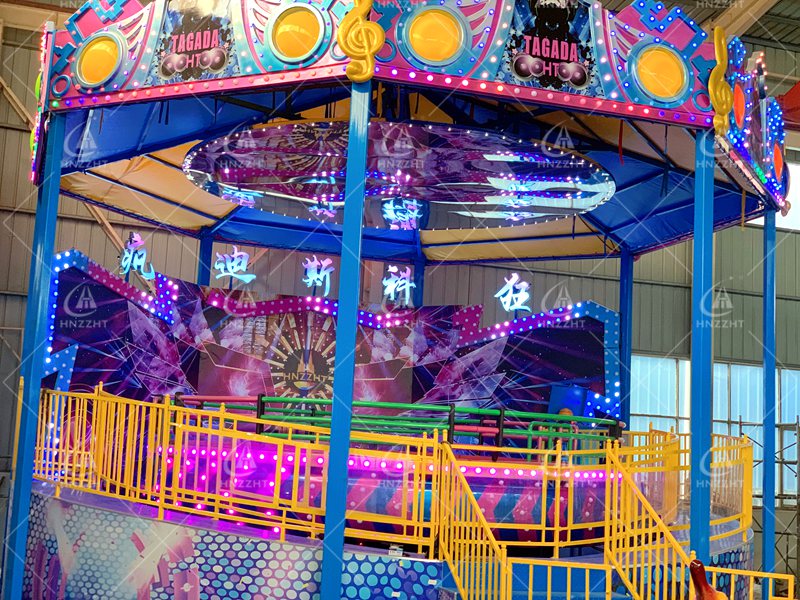
The tilting angle refers to the degree at which the passenger platform inclines during operation. This movement is designed to increase the dynamic feeling of the ride while keeping passengers engaged throughout the experience. The platform can create a sensation of sliding, lifting, and shifting as it rotates, making every ride different.
In most designs, the tilting angle of a Tagada ride is usually adjustable according to the structure, operating requirements, and safety standards. Common tilting ranges are generally between 10 and 20 degrees, while some advanced models may offer customized motion settings to create stronger excitement.
The tilting angle plays an important role in determining the intensity of the attraction. A smaller angle provides a smoother and more comfortable experience, which is suitable for a wider range of visitors. A larger angle creates stronger movement effects, increasing the thrill level and making the attraction more exciting.
For a Tagada Thrill Ride, the combination of rotation speed, bouncing system, and tilting angle creates the signature unpredictable movement that attracts teenagers and adventure seekers. The carefully designed tilt mechanism allows riders to experience dynamic changes while maintaining a controlled operating environment.
Several factors determine the ideal tilting angle of a Tagada ride:
The mechanical structure, hydraulic system, and support frame all affect how much the platform can safely tilt. A well-designed system ensures stable movement and reliable performance during operation.
The number of riders on the platform can influence the movement effect. Engineers consider passenger weight distribution when setting the appropriate tilt range.
The tilting system must follow strict safety principles. Proper limits help prevent excessive movement while maintaining an exciting riding experience.
Indoor parks, outdoor amusement parks, and traveling fairs may have different requirements. The tilt angle can be adjusted according to the target location and visitor preferences.
Regular inspection of the tilting mechanism is essential for long-term operation. Operators should check hydraulic components, connection points, control systems, and safety devices to ensure smooth movement.
A professional Tagada Ride Manufacturer focuses on creating reliable mechanical systems that balance excitement and safety. The design of the tilting function requires accurate engineering to provide a thrilling experience without compromising passenger protection.
The tilting angle is not only a technical specification but also an important part of the attraction value. A properly designed tilt system can improve visitor satisfaction, increase repeat rides, and enhance the overall popularity of an amusement park.
The Tagada ride continues to be a favorite choice for entertainment venues because it combines simple operation with exciting movement effects. Understanding the role of the tilting angle helps operators choose the right equipment configuration and provide visitors with a memorable experience.