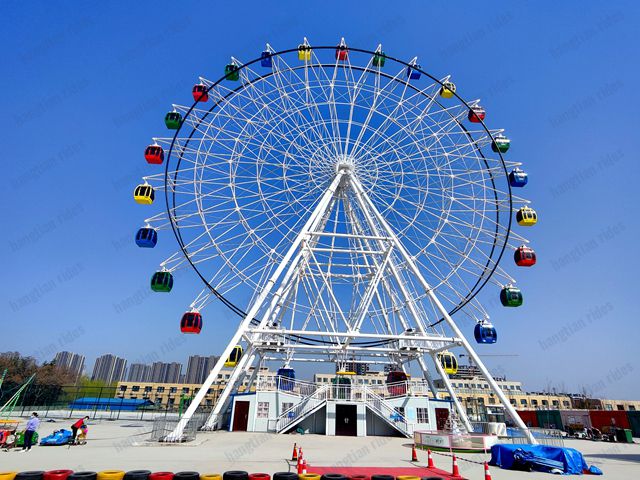
The Ferris wheel stands as a timeless symbol of amusement parks and carnivals worldwide, captivating riders with its gentle, panoramic views. Invented by George Washington Gale Ferris Jr. for the 1893 Chicago World’s Fair, this giant wheel has evolved into various forms, including compact versions like the
small ferris wheel or
mini ferris wheel for sale, which cater to smaller venues and family-friendly attractions. Understanding how it works not only satisfies curiosity but also aids those considering to
buy a ferris wheel for commercial ventures. In this guide, we’ll delve into the mechanics, components, and practical aspects—covering everything from operational principles to
ferris wheel cost—to help you appreciate this engineering marvel.
🔧 1. The Core Mechanics: How the Wheel Functions
A Ferris wheel operates on simple yet robust principles of rotational motion and balance. At its heart, it consists of a large vertical wheel mounted on a central axle, with passenger cabins (or gondolas) attached evenly around the rim. Here’s a step-by-step breakdown:
- Rotation Mechanism: The wheel rotates slowly around its central axle, driven by an electric motor or hydraulic system. This motor connects to the axle via gears or a chain drive, ensuring smooth, controlled movement. Passengers experience a gentle ascent and descent as their cabin moves in a circular path, providing panoramic views without intense forces.
- Counterweight and Balance: Each cabin is counterbalanced to maintain equilibrium during rotation. Gravity plays a key role—as one side rises, the other descends, keeping the wheel stable. Modern designs incorporate safety features like redundant braking systems to handle power failures or emergencies, ensuring rider security.
- Speed and Control: Speeds are typically low (e.g., 2–4 rotations per minute for small ferris wheel models) to prioritize safety and comfort. Operators control this via onboard computers or manual panels, adjusting for weather conditions or rider capacity. This efficiency makes it ideal for parks seeking reliable attractions, including affordable mini ferris wheel for sale options.
🛠️ 2. Key Components and Structural Design
The wheel’s reliability stems from its durable construction, using materials like steel for the frame and fiberglass-reinforced plastic (FRP) for cabins. Here’s what makes it tick:
- Frame and Support: A sturdy lattice or spoke structure supports the wheel, anchored to a foundation that handles dynamic loads (e.g., wind or uneven weight distribution). For portable small ferris wheel units, designs emphasize lightweight materials and easy assembly, often featuring diameters as compact as 5.5 meters for space efficiency.
- Cabins and Passenger Safety: Gondolas are enclosed or open-air, equipped with seating, restraints, and ventilation. Advanced models include climate control for year-round operation. Materials like FRP resist corrosion and fading, crucial for longevity in outdoor settings—ideal when you buy a ferris wheel for high-traffic areas.
- Power and Utility: Electric motors (e.g., 5–10 kW for mini versions) power the rotation, drawing from standard voltage sources. Utility requirements include stable power supply and minimal infrastructure, making mini ferris wheel for sale units popular for carnivals or small parks due to their low operational complexity.
💰 3. Financial and Practical Considerations: From Cost to Customization
If you’re planning to buy a ferris wheel, understanding costs and options is essential. Prices vary based on size, features, and customization:
- Ferris Wheel Cost Factors: Entry-level small ferris wheel models start around 20,000–50,000, covering basic 6–12 passenger units. Larger or premium versions can exceed $500,000, influenced by materials, safety certifications, and installation. Key expenses include shipping, duty fees, and site setup—always factor these into your budget when exploring mini ferris wheel for sale listings.
- Purchasing Insights: To buy a ferris wheel, research suppliers offering compliance with international safety standards (e.g., ASTM or CE). Many manufacturers provide scalable options, from fixed installations to portable units suitable for traveling shows. Emphasize after-sales support like warranties and spare parts to avoid downtime.
- Why Choose Smaller Models? Mini ferris wheel for sale units offer lower ferris wheel cost, easier maintenance, and versatility for venues with space constraints. They maintain the classic experience while being energy-efficient—perfect for startups or expanding small ferris wheel fleets without massive investments.
🌐 4. Integration and Modern Innovations
Today’s Ferris wheels blend tradition with tech enhancements. For instance, digital controls allow programmable light shows or themed cabins, boosting guest appeal. When selecting a ride, consider site-specific factors like local regulations and visitor flow—larger wheels (up to 128 meters tall) dominate landmarks, but
small ferris wheel iterations excel in community parks or private events. Innovations in materials and automation ensure efficiency, reducing long-term
ferris wheel cost and enhancing profitability.
🎡 Conclusion: Embrace the Wonder, Make an Informed Investment
The Ferris wheel’s magic lies in its elegant simplicity—transforming basic physics into unforgettable experiences. Whether you’re drawn to classic giants or compact
mini ferris wheel for sale options, understanding its workings empowers smarter decisions. Key takeaways include prioritizing safety certifications, evaluating total
ferris wheel cost (beyond the sticker price), and choosing scalable models that align with your space and budget. Ready to
buy a ferris wheel? Start by vetting reputable suppliers and envision how this iconic ride can elevate your venue’s appeal. After all, from grand city skylines to intimate carnivals, the Ferris wheel continues to turn dreams into reality—one rotation at a time.