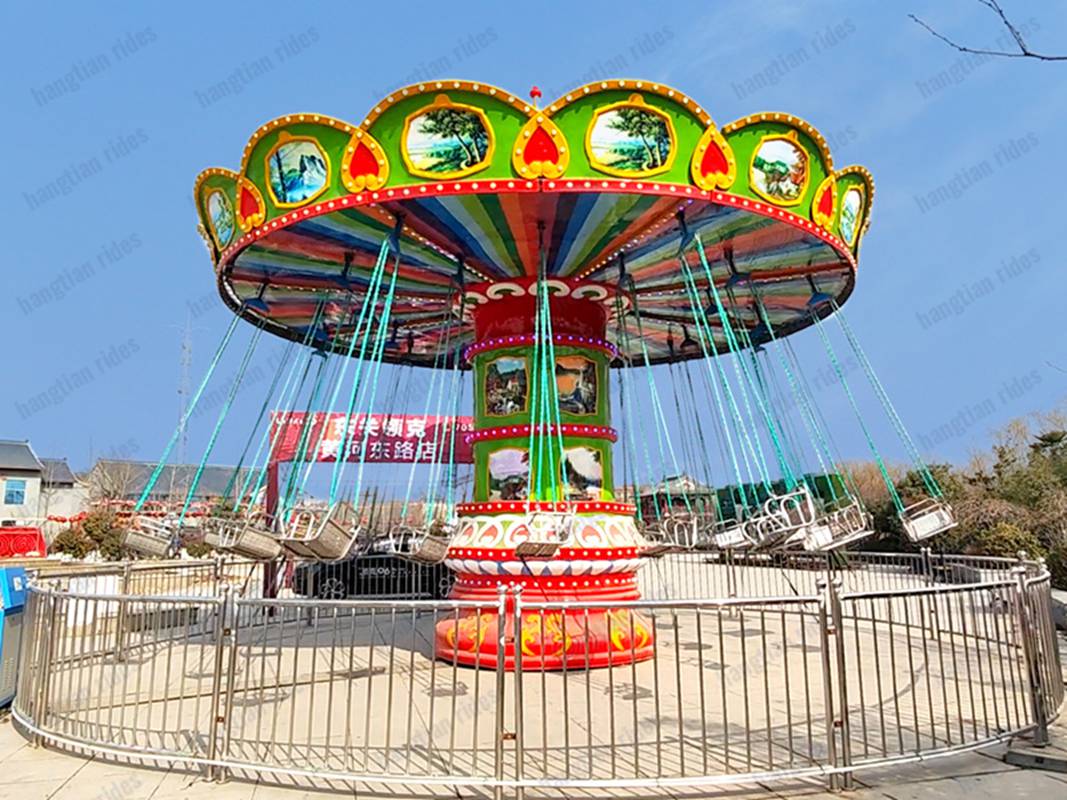
Integrating a
flying chair ride (also known as a
flying swing ride) into your amusement facility is a significant investment decision. While visually captivating and popular with guests, profitability hinges on strategic alignment with
amusement park trends and your specific
amusement park types. Here’s a comprehensive breakdown to guide your decision:
1️⃣ Cost Structure & Investment Analysis
- Initial Purchase & Setup:
- flying chair rideprices vary widely (5,000–5,000–35,000+), materials, and theming.
- Additional costs include shipping (oversized cargo fees), professional installation, site preparation (14m x 14m footprint.
- Operational Expenses:
- Electricity consumption (especially for illuminated/trailer-mounted models, insurance, and staffing.
- Budget 10–15% of initial cost annually for upkeep.
2️⃣ Revenue Generation Potential
- Direct Income Streams:
- Per-Ride Tickets: Ideal for pay-per-ride parks. A 24-seat ride with 60-second cycles can serve ~1,440 riders/day (at 75% capacity), boosting daily revenue significantly.
- Park Admission Upsell: Enhances value for all-inclusive parks, attracting families seeking gentle thrills—a key amusement park trend for broadening demographic appeal.
- Secondary Spending:
- Increases dwell time near concession stands/photo booths. Themed flying swing ride (e.g., dinosaur/fruit designs encourages souvenir purchases.
3️⃣ Alignment with Amusement Park Trends
- Portability & Flexibility: Trailer-mounted flying chair ride models support pop-up events, seasonal relocations, and multi-park rotations—critical for carnivals or seasonal parks.
- Family-Centric Experiences: Demand for “shared thrill” rides (moderate intensity for all ages) dominates amusement park trends. Flying swings deliver this safely.
- Thematic Integration: Customizable designs (colors, themes allow seamless blending into story-driven parks, enhancing perceived value.
4️⃣ Profitability by Amusement Park Types
- Fixed Theme Parks:
- High ROI in parks with heavy family traffic. Supports repeat visits when refreshed with new themes.
- Ensure compliance with strict amusement park design standards (e.g., ASTM/CE).
- Mobile Carnivals/Fairs:
- Low setup costs and trailer mobility maximize seasonal revenue. Ideal for transient audiences seeking novelty.
- Small/FEC Parks (Family Entertainment Centers):
- Space-efficient flying swing ride fits compact layouts. Combines with other rides to create diversified attraction bundles.
5️⃣ Key Risks & Mitigation Strategies
- Safety & Compliance: Prioritize suppliers with international certifications (ASTM, EN, GB/T). Independent pre-shipment inspections are non-negotiable.
- Weather Dependence: Open-air rides face downtime in rain/wind. Factor in regional climate impact on annual operation days.
- Market Saturation: Avoid oversupply of similar rides in your region. Unique theming or combined experiences (e.g., ride+game packages) reduce competition.
💡 The Verdict: When Does a Flying Chair Ride Make Sense?
Invest if:
✓ Your park caters to families or mixed-age groups (aligns with amusement park trends).
✓ You prioritize moderate-capacity rides with high throughput.
✓ Thematic flexibility supports your park’s branding (amusement park types with strong narratives benefit most).
✓ Your budget covers hidden costs (shipping, installation, long-term maintenance).
Pro Tip: Pilot test popularity! Rent a portable
flying chair ride for a season to gauge local demand before full investment. Track ridership, maintenance incidents, and guest feedback meticulously.
By strategically evaluating costs, trends, and park positioning, the flying chair ride can transform from a scenic attraction into a reliable profit engine—elevating guest satisfaction and your bottom line.