
Safety Features of Modern Carousel Rides
A carousel looks like the gentlest ride in the park, and that is exactly why operators sometimes overlook its safety systems. Modern Carousel Rides For Sale combine a heavy rotating structure, moving horses that rise and fall, a drive that has to stop precisely at the boarding point and a continuous stream of families stepping on and off. This article walks through the safety features that a well built carousel should have, from the frame and the drive to the small details that decide whether a machine is comfortable to run every day.
Structure And Platform: Safety Starts Under The Deck
The platform is the part guests touch, so it should be the first thing you inspect. A modern carousel deck is built as a steel frame with a properly supported surface, not as a wooden floor laid over whatever was available. The deck should be level, free of steps and gaps, finished with a non slip surface that still grips when it is wet, and surrounded by a solid or panelled skirt that keeps feet and clothing away from the rotating mechanism.
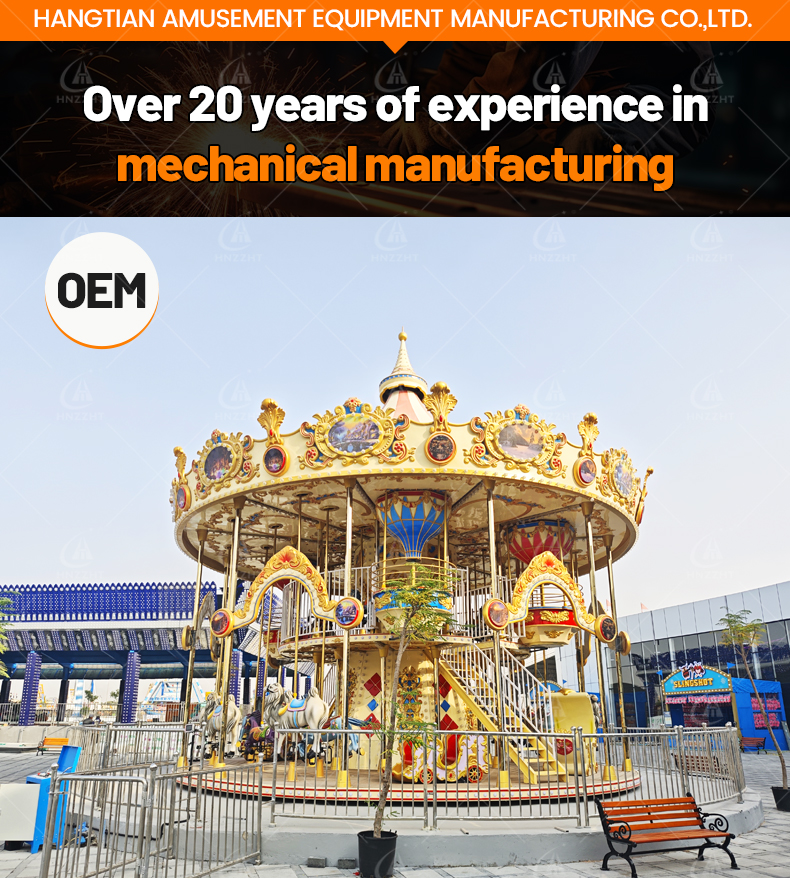
Above the deck, the centre column, the canopy frame and the horse hangers carry the real loads. The centre bearing has to be a slewing bearing sized for years of continuous rotation, and every hanger rod, cross beam and canopy fixing should be fabricated from structural steel with a defined safety factor and protected against corrosion. On the largest machines, this structure is also designed for wind load, which matters if the carousel stands in an open park or near water.
Access is part of the structure as well. A proper carousel has a defined entrance and exit, a gate that the attendant controls, and a fence line that keeps guests from walking into the rotating envelope while the ride is turning. Look at where the gap is when the platform rotates past the fence, and confirm that a child cannot reach between the two.
Seats, Horses And Restraints
The animals and benches are more than decoration; they are the restraints. A moving horse should have a pole that is firmly located in the platform and in the upper mechanism, a saddle and handles shaped so that a child stays seated, and, on most modern designs, a seat belt or a small lap bar in addition to the guest holding on. Benches should have a backrest and a bar that an adult can hold with both hands while supervising a young child.
Restraint hardware should be chosen for the range of guests the ride attracts. Belts are usually polyester webbing with a metal buckle, sized so they cannot be adjusted to a slack position, and any mechanical bar should lock positively and release with an action that a passenger cannot perform alone. Check the spacing between horses, the clearance between a swinging horse and the next seat, and the height of the poles where a standing child could hit them.
The boarding area deserves the same attention. A height gauge at the gate, a non slip step, a painted line showing where the platform edge stops and enough space for a parent to stand while loading a child all reduce the small accidents that never make the news but do stop a ride. On any serious Amusement Park Carousel, the boarding procedure is written down as part of the operating manual, not left to habit.
Drive, Braking And Speed Control
The drive system decides how the ride feels and how safely it stops. Older carousels used a simple motor and gearbox with a mechanical brake; modern machines use an inverter, which ramps the platform up to speed and down again smoothly, keeps the starting current low and allows the speed to be set to suit the crowd. A soft start is not only comfortable, it reduces the shock load on the centre bearing and the frame every time the ride begins.
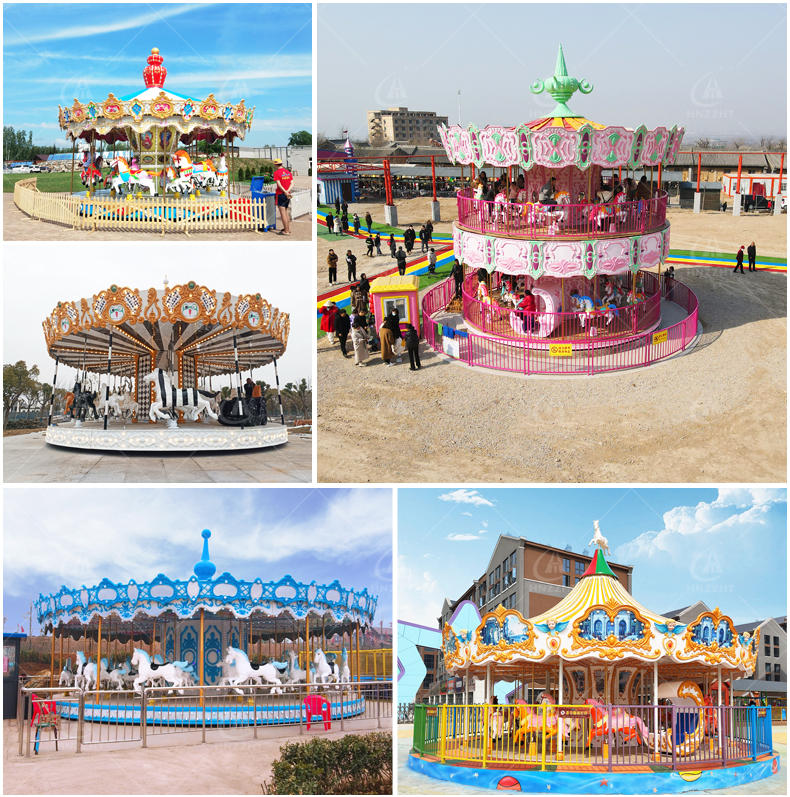
Braking and holding are the parts to question. Ask whether the machine has a brake that engages automatically when the power is removed, whether there is a device that prevents the platform from being turned backwards by hand while it is loaded, and how the platform is brought back to the boarding position if the drive fails. On a family ride, this last point matters more than the top speed: the operator has to be able to unload guests calmly and quickly.
Speed and acceleration should be adjustable and locked behind a parameter setting so that they cannot be changed by accident. A commercial carousel usually runs at a modest rotation speed with a defined number of turns per cycle, and the setting is agreed with the operator at commissioning. If the drive allows an unusually fast rotation, ask what limits it and who can change them.
Electrical Safety And Emergency Systems
The electrical installation on a carousel is exposed to weather, vibration and constant movement, which is why the cabinet and the wiring deserve a close look. The control cabinet should be sealed against dust and water, mounted where it can be serviced without climbing over the mechanism, and fitted with a lockable main switch that isolates the whole ride. Modern machines use residual current protection, surge protection, a phase failure relay and clearly labelled circuits so that a fault can be traced without guesswork.
Emergency controls have to be reachable and unmistakable. There should be an emergency stop at the operator position, and on larger rides a second one at the exit or near the drive, both of which cut the drive and apply the brake. Every safety circuit should be wired so that a broken wire stops the ride rather than allowing it to continue, and the operator should be trained to know what happens after an emergency stop and how the ride is restarted.
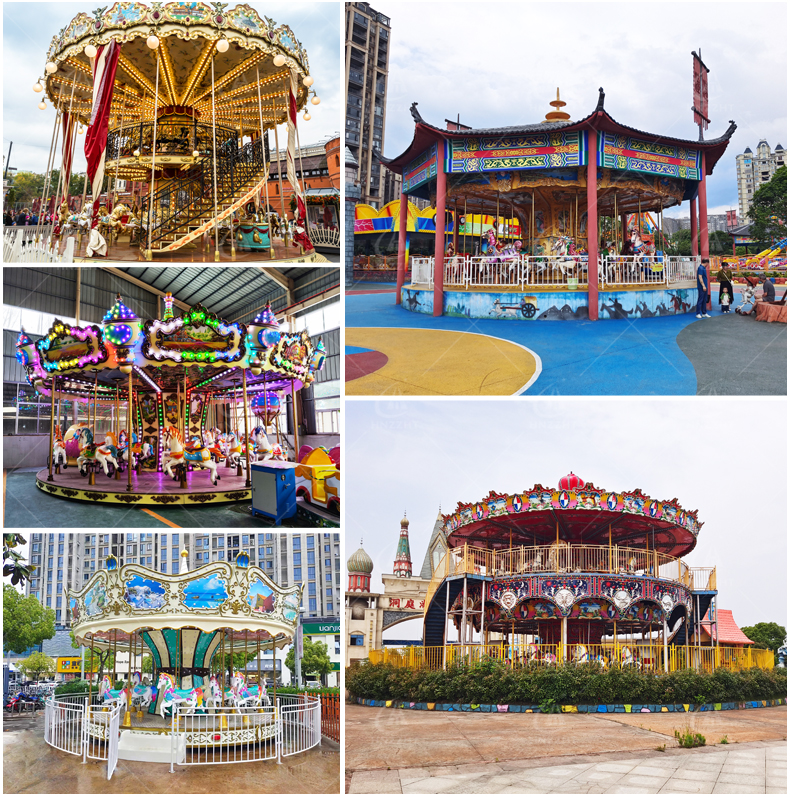
Lighting and the sound system are part of the same picture. Low voltage LED lighting inside the canopy and along the frame gives evening operation without exposing guests to mains voltage, and cable routing that cannot chafe against the rotating parts keeps the installation reliable for years. On any outdoor carousel, the structure should also be bonded to earth and protected against lightning in line with local rules.
Everyday Details And Maintenance That Keep It Safe
Most incidents on family rides come from wear and from routine, not from design. A carousel therefore needs a written inspection programme: before opening, walk the platform and check the deck, the restraints and the boarding gate; weekly, check the torque of the structural bolts and grease the hangers and the centre bearing; monthly, look at the drive, the brake clearance, the electrical connections and the condition of every restraint; yearly, inspect the structure for cracks and have a third party check the machine if local rules require it.
Spare parts should be planned at the time of purchase rather than in the middle of a holiday weekend. Belts, buckles, hanger bearings, limit switches, relays and a set of lamps are cheap to keep in stock and expensive to wait for. Ask the manufacturer for a recommended list with part numbers, and ask how long those parts will be available, which is a fair question for any Commercial Carousel Ride that is expected to run for a decade.
Documentation is what turns maintenance from an opinion into a process. The handover pack should include the operation manual, the general arrangement and foundation drawings, the electrical diagrams, the inspection and test report and the spare parts list, all in a language the local team reads. Records of every inspection should be kept, because they protect the park during an inspection and they reveal a component wearing out before it fails.
What To Confirm With The Manufacturer
Before you sign, ask the questions that separate a Carousel Ride Manufacturer who understands safety from one who assembles parts. Which standard was the design calculated to, and what safety factor is applied to the hangers, the centre column and the canopy? Which certifications and test reports will be supplied, and who signs the load calculation? What is the rated load per horse or bench, and how was it verified?
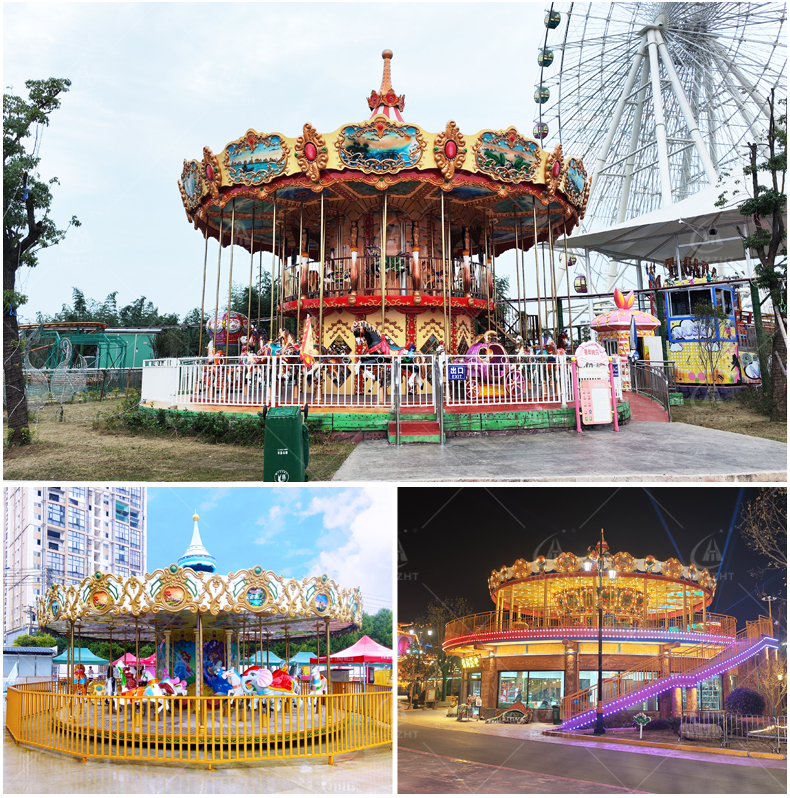
Then ask about the operating side. Which items are adjustable, which are locked, and what does the daily check actually involve? What happens if a restraint is damaged and has to be replaced, and how long does that take? Does the price include installation, commissioning, the load test and training for your operators, or are those quoted separately? A clear answer to those questions usually means the safety features were designed in rather than added afterwards.
Finally, walk the ride yourself with the manufacturer’s engineer and ask him to demonstrate every safety device, the emergency stop, the brake, the evacuation procedure and the boarding sequence. A modern carousel is a safe machine, but only when the design, the maintenance and the operating procedure all work together, and the buyer is the person who can insist that they do.