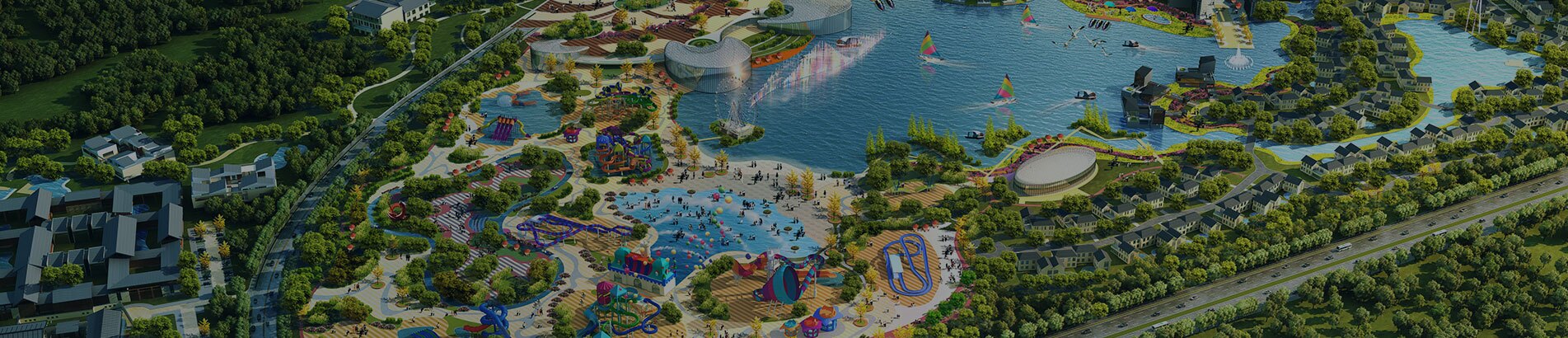
Why Riders Love Drop Tower Rides
Walk through any park on a busy afternoon and the longest queue is often under the tallest vertical structure on site. A Drop Tower Ride delivers one of the purest thrills in an amusement park: a slow lift, a pause at the top, and a fall that lasts only a few seconds yet is remembered for years. For operators the appeal is just as practical, because a narrow footprint, a short cycle and a high throughput let a single tower serve thousands of guests a day. This article looks at why the ride works so well, what really decides the price, and how to compare offers before you commit to a model.
Why The Drop Tower Ride Keeps Its Queue Moving
The ride is built around a simple promise: guests are lifted slowly to the top of a tower, held there long enough to look across the whole park, and then released into a controlled fall that ends in a smooth brake near the ground. Nothing about that sequence needs a long track or a large building, so the machine occupies a plot of perhaps ten to twenty metres across while still carrying twelve to twenty-four riders per cycle.
That ratio is what makes the ride valuable on a crowded midway. A cycle of two to three minutes, including boarding and a safety check, gives a throughput that competes with attractions three times the size, and the short cycle keeps the queue moving fast enough that guests stay in line instead of walking away. The visual drama does the marketing for free, because a tower is visible from every corner of the park and the scream that follows a drop carries further than any sign.
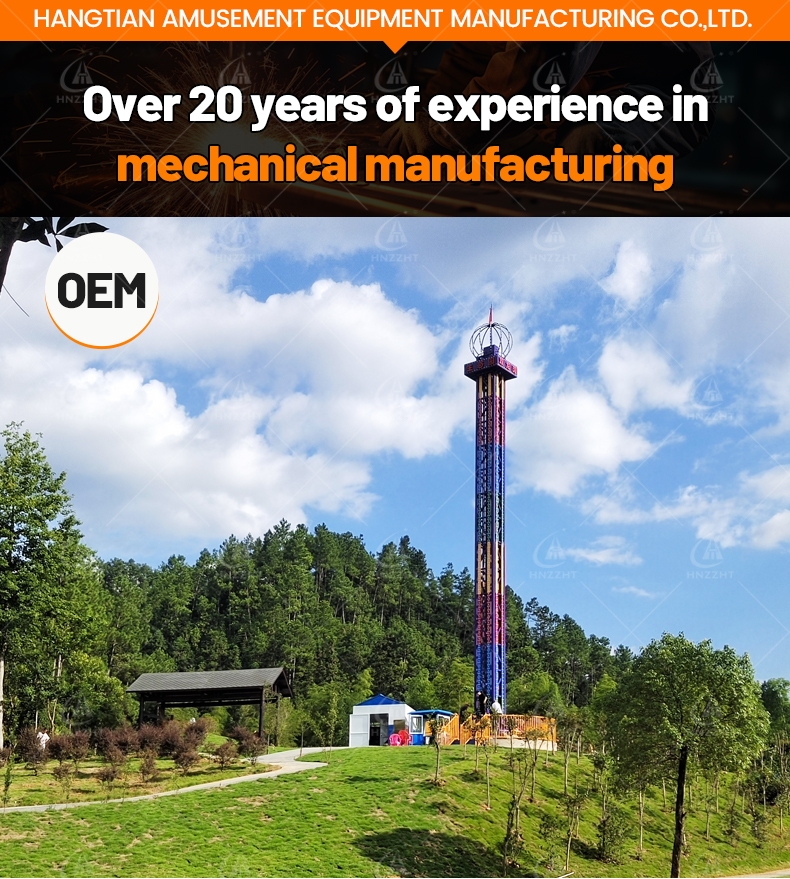
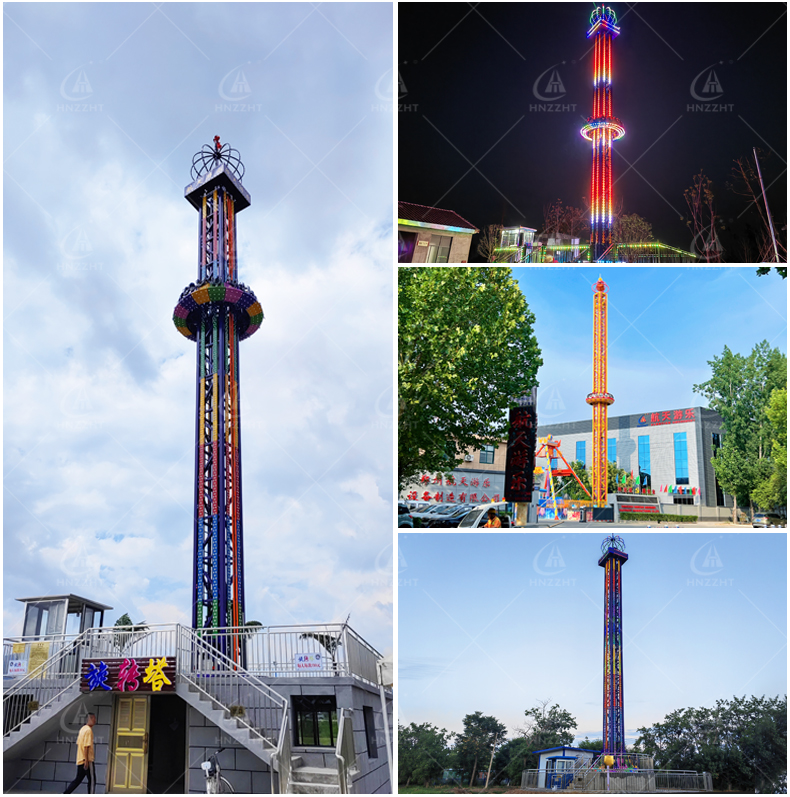
There is also a practical side that operators discover after installation. A tower needs a small foundation compared with a coaster, fits into a leftover plot between existing attractions, and can be dressed with lighting so that it becomes the landmark of a night-time skyline without any extra ride system.
The Ride Experience From The Ground And From The Seat
From the ground the drop looks instantaneous. From the seat the experience is a sequence of distinct moments: the restraint check, the slow climb with the park unfolding below, a pause at the top where the only sound is the wind and the chatter of the other riders, then the release and the rush of air before the magnetic or pneumatic brake takes hold and the carriage settles back to the platform.
The height does the heavy lifting, but the details decide whether guests come back. A seat that is comfortable for an adult and safe for a child, an open front that gives an unobstructed view, a lift speed that builds anticipation instead of boredom and a brake that stops firmly without a jolt are the differences guests feel but cannot name. Parks that get these right see repeat riders in the same afternoon.
The ride also suits a mixed audience better than most thrill machines. Height restrictions normally place the tower in the family thrill bracket, so teenagers ride it repeatedly while parents wait at the fence and take photographs, and the machine gives the park a genuine headline attraction without excluding younger visitors from the area around it.
What Drives Drop Tower Ride Cost
Buyers often ask for a single figure before they have described the site, and that is the fastest way to get a number that means nothing. Drop Tower Ride Cost is driven by four things, and each of them can move the price by a wide margin.
The first is height and therefore structure. A fifteen metre tower is a different engineering exercise from a thirty metre one, because the steel section, the foundation depth, the wind loading calculation and the transport arrangement all change with the height. The second is the ride system: a simple gravity or pneumatic drop with a mechanical brake is cheaper than a compressed-air launch or a magnetic brake that can hold the carriage and release it in stages.
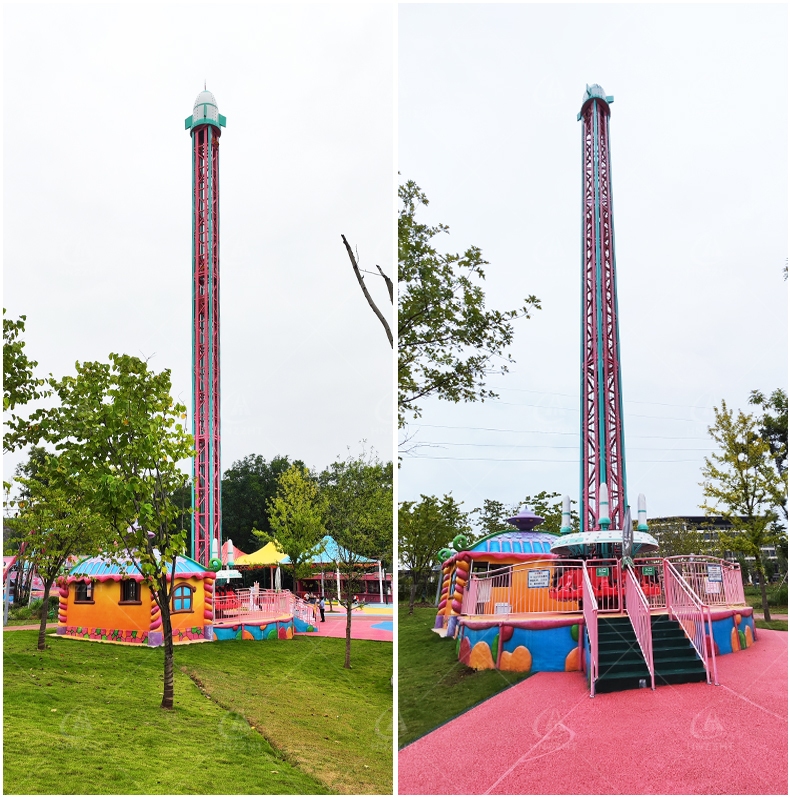
The third is the seat count and the carriage design. The same tower can be delivered as a single row of two seats or as a ring of twenty-four, and every additional seat adds restraint hardware, harness inspection points and control logic. The fourth is everything outside the machine: a themed cladding, a lighting package, a queue line with shade and fencing, a control cabin, the foundation work, the crane hire for erection, the electrical supply and the local inspection and certification process.
Because those items are usually purchased in different places, the honest way to compare offers is to ask for a scope list rather than a headline price. A quotation that separates structure, ride system, restraint set, control cabinet, documentation, installation support and warranty can be compared line by line, and the cheapest total is rarely the cheapest machine.
Comparing A Drop Tower Ride For Sale In Detail
Once the budget range is clear, the next step is to judge the hardware. Start with the drive and the brake, because they decide ride quality and long-term maintenance. A lift that pulls away smoothly and a brake that releases and grips predictably protect the structure from shock loads, reduce the wear on the carriage and make the ride feel controlled rather than violent.
Then examine the safety package on the Drop Tower Ride For Sale you are considering. Restraints should be dual independent systems, with a sensor that prevents the cycle from starting if any harness is not locked. There should be a limit switch on every gate, an emergency stop within reach of the operator, an overspeed detection device, a manual lowering system for a power failure, and a clear procedure for evacuating riders at height.
Documentation separates a serious supplier from a trading company. Ask for the steel material certificates, the welding records, the load calculation for the tower and the base, the electrical drawings, the operating and maintenance manuals, the spare parts list and the factory test report from the run-in of the finished machine. For most parks that paperwork is what the local safety authority will ask for first.
Finally, compare logistics and support: how the tower is broken down for shipping, whether the packing protects the painted surfaces, how many engineers attend the installation, how long they stay for commissioning and staff training, and how quickly spare parts can be sent after the warranty period. Those answers often change the real lifetime cost more than the difference in quotation.
How To Buy Drop Tower Ride Equipment Without Surprises
The buying process goes smoothly when the specifications are settled before the deposit. Prepare a short brief: the plot dimensions, the clear height limit, the ground condition from a soil report, the power supply available, the guest numbers you expect on a peak day, the age group you want to attract and the local standard the ride must satisfy. Send that brief with a site drawing, and every supplier will quote against the same requirements.
When offers arrive, shortlist two or three and check the factory rather than the catalogue. Photographs of the welding on the tower sections, the surface preparation before painting, a carriage being run in on the test tower and the way a finished unit is packed for sea freight tell you more about quality than any specification sheet. If a visit is possible, ask to see a machine in production and to speak to a park already operating the same model.
The contract should fix the delivery date, the installation scope, the commissioning tests, the training, the warranty period and the spare parts commitment, and it should state which documents are handed over on delivery. Agreeing these points in writing at the start is how a park can Buy Drop Tower Ride equipment with confidence and open on the date printed on the marketing plan.
Safety, Maintenance And The Park Around The Tower
Daily checks take only minutes and prevent most incidents: restraint function, brake operation, gate switches, emergency stop, the condition of the cables or chains and a walk round the fence line. Monthly and annual servicing follows the manufacturer schedule and covers the brake pads, the bearing assemblies, the carriage guides, the control cabinet and the tower bolts, with the results recorded so that the inspection history is complete.
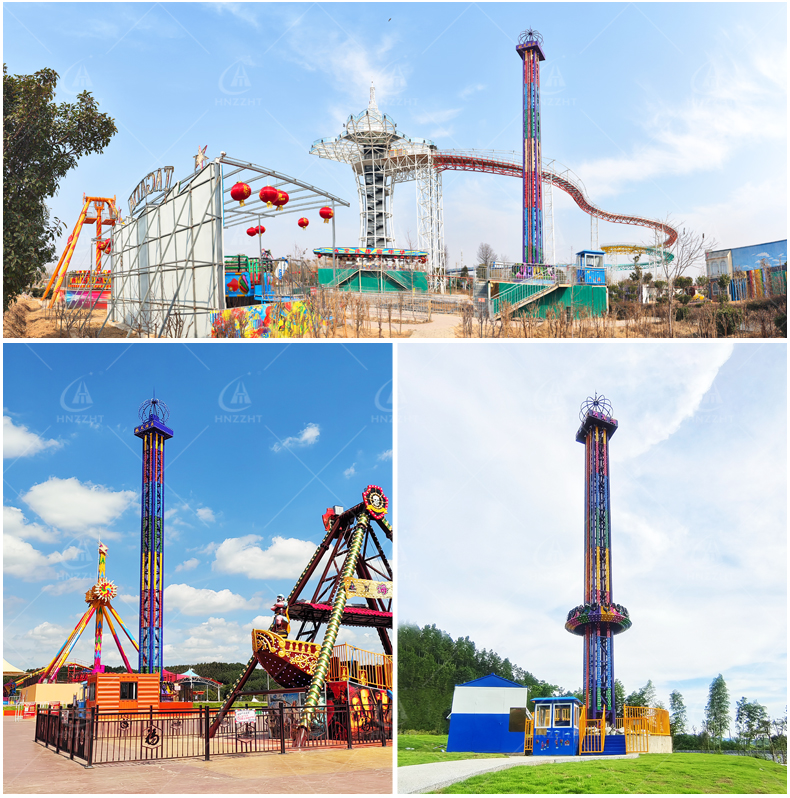
The site around the ride deserves as much thought as the machine. A wide queue with shade, a clear exit route, a fence far enough out to keep the falling arc clear at night, lighting that reads the tower silhouette from a distance and a photo spot at the base all increase the value of the attraction without changing the ride itself. A seating area beside the exit keeps families together and keeps the next queue moving.
Plan the tower as the centre of a small area rather than as a standalone machine, and it will earn its place in the park for a decade. Compare Buy Drop Tower Ride options on structure, restraint design, brake system and support rather than on the lowest price alone, and the ride you open will keep both the queue and the review score high.